Get the Blueprint
Blueprint 4th edition (PDF or Print) - Register your interest

Blueprint for an Active Australia
Why focus on physical activity?
Optimal amounts and types of physical activity
Snapshot of physical activity
Joining up action for an active Australia
Applying what works internationally
Connecting existing national strategies
NPAN case study
Mobilising every level of government
Western Sydney Moving case study
Acting on shared priorities
What a National Physical Activity Plan should deliver
References
Introduction
Why focus on physical activity?
Physical inactivity is one of the most pressing public health challenges facing Australia. Insufficient levels of physical activity contribute to a growing burden of chronic diseases (including cardiovascular disease, type 2 diabetes, obesity, dementia, mental health and musculoskeletal disorders, and some cancers),1-4 with associated increased healthcare costs and reduced workplace productivity.5,6
The health benefits of physical activity begin early in life, with documented improvements in physical literacy, cognition, learning, and physical and mental health development in active children and young people.7-10 Among adults, benefits include improved metabolic and weight management, cardio‑respiratory function and fitness, immunity, energy levels and quality of life.11-14 Physical activity improves fitness, strength and balance, as well as mental health and wellbeing across the lifespan, from early childhood to older age.15-18 Physical activity participation can bring people together, such as through sport and active recreation, foster a sense of inclusion and belonging, and improve social connectedness, which in turn promotes improved mental health.19,20
Physical activity also has clear economic benefits. Estimates suggest that in 2018–19, physical inactivity accounted for approximately $2.4 billion in health spending, including $1.7 billion directly attributed to inactivity and $763 million through related risk factors such as high blood pressure.21
Optimal amounts and types of physical activity
The Australian 24-hour movement guidelines for adults and older adults, released in 2026, highlight the levels of physical activity and sleep required for optimal health outcomes.22 These guidelines supplement the 24-hour movement guidelines for children and youth,23,24 to create a suite of recommendations that promote increased movement, reduced sedentary behaviour and optimal sleep.25 The guidelines focus on the importance of accumulating light, moderate and vigorous intensity aerobic physical activity, as well as muscle strengthening activities, across the lifespan. They also recommend reducing time spent in sedentary behaviours, limiting recreational screen time for children and young people, and for adults of all ages, breaking up long periods of sitting. This is important, as technological changes have resulted in increased sedentary time due to automation of daily tasks and services and increased screen time in home, work, education and entertainment settings.26-28 The guidelines emphasise that all movement counts and that physical activity may be accumulated as a result of planned or structured activity. This can include leisure time through sport and recreation, active travel, in education settings, and during paid and unpaid work. Light physical activity can be accumulated through movement that is incidental to doing something else (i.e. unstructured and unplanned physical activity), often in the context of daily activities, or in caring or occupational duties.
Snapshot of physical activity participation in Australia
Despite the increasing awareness of the health, social and economic benefits of physical activity participation levels remain low. Different guidelines for each age group have made it difficult to compare the prevalence of meeting guidelines across the lifespan. This includes data collected from previous physical activity and sedentary behaviour guidelines for adults and older adults compared to 24-hour movement guidelines for children and young people.
Current national data shows that:
- Just over two-thirds of young children in Australia (2–5 years) meet the target of 3 or more hours of physical activity every day.29 Only 18% of children and young people in Australia (5–17 years) achieve the Australian recommended amount of 60 minutes of moderate to vigorous activity every day, and 3 times weekly strengthening activities.29
- Fewer than one quarter of adults in Australia (18–64 years) meet the combined national physical activity and sedentary behaviour guidelines which includes both aerobic (30 minutes or more of moderate to vigorous activity on most days) and strengthening (twice weekly) components.30 In this age group, 56% meet the aerobic guideline and 27% meet the strengthening guideline.30
- Only one in three (33%) older adults in Australia (65 and older) meet both the aerobic (30 minutes on most [5 or more] days per week) and strengthening (twice weekly) guidelines. Fewer than half (43%) meet the aerobic guideline and 25% meet the strengthening guideline.30
- Many priority populations are less likely to meet the guidelines, including Aboriginal and Torres Strait Islander peoples, people with disability and people experiencing socioeconomic disadvantage. Only 18% of Aboriginal and Torres Strait Islander adults in non-remote areas meet the physical activity guidelines31-38 (see Aboriginal and Torres Strait Islander peoples and Priority populations action areas).

Joining up action for an active Australia
Increasing physical activity depends on action in the places where people live, learn, work, travel and play. The levers for change sit across every level of government and many portfolios. They also sit with non-government organisations, sporting bodies, employers, education providers, researchers and communities. This section draws on the evidence in the 12 action areas that follow. It brings together the priorities they share and makes the case for a National Physical Activity Plan to deliver them. The detailed evidence behind each priority sits in the relevant action area, and we point to those action areas throughout.
The Blueprint sets out what needs to be done. A national plan would set out who does what, by when, and with what investment. It would join up the strategies Australia already has, giving them shared targets and a common way to measure progress.
Meeting Australia's 2030 targets
The National Preventive Health Strategy 2021–2030 sets three national physical activity targets for 2030:39
- reduce the prevalence of insufficient physical activity among children, adolescents and adults by at least 15%
- reduce the prevalence of people undertaking no physical activity by at least 15%
- increase the prevalence of people meeting the muscle strengthening guidelines by at least 15%.
These targets align with the World Health Organization's Global Action Plan on Physical Activity 2018–2030 (GAPPA), which calls for a 15% relative reduction in physical inactivity by 2030.4 They also support the United Nations Sustainable Development Goals (Figure 1).40
With four years to go, most children, young people and adults in Australia remain insufficiently active. Closing that gap by 2030 will take coordinated effort on a scale beyond any single strategy.
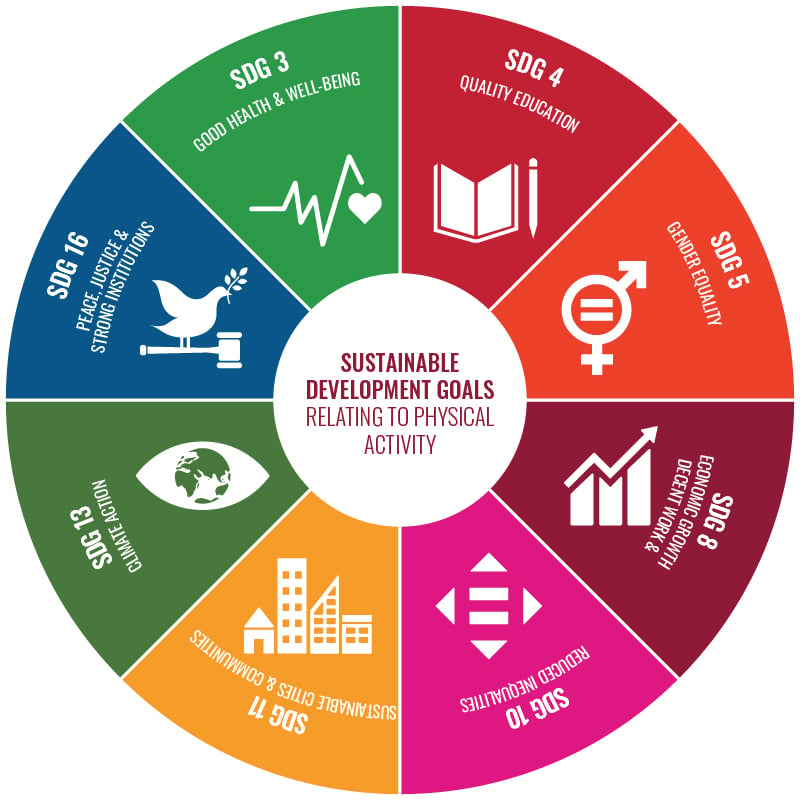
Figure 1 – Sustainable Development Goals relating to physical activity
For more information on sustainable development goals and physical activity, see Appendix 1.
For more information on United Nations Sustainable Development Goals, visit www.un.org/sustainabledevelopment.
Disclaimer: The content of this publication has not been approved by the United Nations and does not reflect the views of the United Nations or its officials or Member States.
This image has been inspired by ACTIVE: a technical package for increasing physical activity, Figure 4, by the World Health Organization. Available at iris.who.int, licensed under CC BY-NC-SA 3.0 IGO. This translation was not created by the World Health Organization (WHO). WHO is not responsible for the content or accuracy of this translation. The original English edition shall be the binding and authentic edition.41
Figure 1 is reflective of key concepts and SDG’s that align with content included in the 4th edition of the Blueprint for an Active Australia.
Applying what works internationally
Countries that have developed stronger policy frameworks, with multisectoral and integrated action, show evidence of increasing population levels of physical activity.42 A review of national physical activity policies across 64 countries shows how widely nations now use national policy to drive population-level change.42
GAPPA sets out four objectives: active societies, active environments, active people and active systems.4 Active systems provide the foundation for the other three. They include leadership and governance, partnerships across sectors, data and monitoring, research, workforce development and sustained funding.
The International Society for Physical Activity and Health (ISPAH) identifies eight investments that work for physical activity.43 Each one aligns with an action area in this Blueprint:
whole-of-school programs
- active transport
- active urban design
- healthcare
- public education, including mass media
- sport and recreation for all
- workplaces
- community-wide programs.
A national plan is the mechanism that brings these investments together, so that each strengthens the others.
Connecting existing national strategies
Australia has several national strategies that support physical activity. Each makes an important contribution within its own portfolio (Table 1).
Strategy |
Lead portfolio |
What it offers physical activity |
What it relies on others to deliver |
|---|---|---|---|
| National Preventive Health Strategy 2021–203039 | Health | National targets and a dedicated physical activity focus area | Action in transport, planning, education and workplaces |
| National Obesity Strategy 2022–203244 | Health, with states and territories | Physical activity as a pathway to healthy weight | Action on activity for its broader health, social and economic benefits |
| National Strategic Framework for Chronic Conditions 2026–203545 | Health | Supportive environments as a foundation for prevention | Specific actions and timelines, which the Framework leaves to other plans |
| Sport Horizon: National Sport Strategy 2024–203446 | Sport | Sport participation and pathways to Brisbane 2032 | Recreation, travel and occupational activity |
States and territories also have their own strategies across health, sport, transport and planning. Their scope and targets vary between jurisdictions.
These strategies cover much of what is needed, but each relies on other portfolios and other levels of government to deliver key parts of the agenda. Transport, planning, education and workplaces each shape how active people are, and each sits largely beyond the health and sport portfolios that lead current strategies. A national plan would connect these efforts, align their targets and track their combined progress.
The National Physical Activity Network (NPAN) shows what is possible. It brings together policy officers from the Commonwealth, states and territories to share evidence and practice (see case study). As an informal network, its reach depends on goodwill. A national plan would build on this foundation with formal coordination, shared accountability and dedicated resources.
Case studies
The National Physical Activity Network (NPAN) is a longstanding, informal community of practice with up to 20 commonwealth, state and territory policy officers which enables the sharing of policy-relevant information and evidence-based practice. It supports discussion on relevant issues, including the development and implementation of physical activity policy across Australia.

Mobilising every level of government
The action areas that follow in the Blueprint show where responsibility and capability for change lie.
The Australian Government provides national leadership, sets targets and guidelines, and funds national programs. It holds key levers for:
- national surveillance and research funding
- Medicare and primary care (Action area 9: Healthcare)
- national campaigns (Action area 12: Mass reach strategies)
- sport participation programs (Action area 7: Sport and active recreation).
State and territory governments hold many of the levers with the greatest reach. They are responsible for:
- land use planning (Action area 5: Built environments)
- public transport and road networks (Action area 6: Active travel)
- schools (Action area 8: Education and childcare)
- public hospitals and community health services (Action area 9: Healthcare).
They are well placed to coordinate action across these portfolios and respond to local and regional needs.
Local governments are closest to communities. They shape streets, parks, paths and public spaces, provide sport and recreation facilities, and deliver local programs (Action areas 1: Children and young people, 2: Older adults, 5: Built environments and 7: Sport and active recreation). They also partner with state and federal governments on infrastructure and community initiatives.47
Partners beyond government also play important roles. Non-government organisations, sporting bodies, employers, education providers and researchers deliver programs, generate evidence and reach people in their communities. Communities and people with lived experience help shape programs and spaces that meet local needs. Co-design is a recurring recommendation across the action areas (Action areas 2: Older adults, 3: Aboriginal and Torres Strait Islander peoples, 4: Priority populations and 5: Built environments).
WSYD Moving shows how a place-based systems approach can bring these partners together to improve levels of physical activity (see case study).
Case studies
WSYD Moving is a systems-oriented health promotion charity tackling physical inactivity and equity across Western Sydney. It brings together a 700+ member cross-sector network, Local Active Partnerships, forums and leadership programs to strengthen collaboration, build local capacity and support organisations and communities to work together to create the conditions for more people to be active.
Acting on shared priorities
Each action area sets out the evidence and recommendations for its own population group or setting. Read together, they show a clear pattern. The same priorities recur across many action areas, and each depends on several portfolios and levels of government to deliver (Table 2).
Table 2: Priorities shared across action areas
Shared priority |
Action areas |
Who holds the levers |
|---|---|---|
| Data, monitoring and surveillance |
|
Australian Government and its agencies; states and territories |
| Workforce capability |
|
Australian Government; states and territories; education and training providers |
| Communication and campaigns |
|
Australian Government, amplified by states, territories and partners |
| Equity, co-design and community leadership |
|
All levels of government and partners |
| Active environments and infrastructure |
|
States, territories and local government |
| Funding, subsidies and incentives |
|
Australian, state and territory governments |
These shared priorities make the case for a national plan. Each one reaches across multiple strategies, portfolios and jurisdictions, and each needs a coordinated response to succeed.
What a National Physical Activity Plan should deliver
The Heart Foundation calls on the Australian Government to lead the development of a fully funded National Physical Activity Plan, in partnership with state, territory and local governments, and non-government organisations such as sporting bodies, employers, education providers, researchers and communities and the sector.
Drawing on the evidence across this Blueprint, the plan should deliver:
- Shared targets and accountability. Adopt the National Preventive Health Strategy targets for 2030, with clear milestones and public reporting of progress.
- Clear roles. Set out who is responsible for each priority across portfolios and levels of government.
- Aligned and sustained investment. Direct funding to the interventions with the strongest evidence, including the eight investments that work, and sustain it beyond short-term funding cycles.
- National surveillance. Establish a comprehensive physical activity surveillance system that captures change across population groups and settings, including priority populations.
- A national communication platform. Deliver an ongoing national campaign with consistent messages that states, territories and partners can adapt.
- A skilled workforce. Build physical activity promotion into training and professional development across the health, education, planning, sport and community sectors.
- Equity from the start. Embed co-design with priority populations, and Aboriginal and Torres Strait Islander leadership, in the design, delivery and evaluation of the plan.
- Research and evaluation. Invest in research and evaluate initiatives, so the plan learns and improves over time.
The 12 action areas that follow provide the evidence and detailed recommendations to inform each of these elements, and a foundation for the plan.
References
1. Anderson E, Durstine JL. Physical activity, exercise, and chronic diseases: a brief review. Sports Med Health Sci. 2019;1(1):3–10. doi:10.1016/j.smhs.2019.08.006
2. Mandili IM, Balobaid AN, Alzahrani HH, et al. Types of chronic diseases associated with sedentary behaviour and physical inactivity. Int J Community Med Public Health. 2022;9(10):3965–3970. doi:10.18203/2394-6040.ijcmph20222388
3. Iso-Markku P, Kujala UM, Knittle K, Polet J, Vuoksimaa E, Waller K. Physical activity as a protective factor for dementia and Alzheimer’s disease: systematic review, meta-analysis and quality assessment of cohort and case-control studies. Br J Sports Med. 2022;56(12):701–709. doi:10.1136/bjsports-2021-104981
4. World Health Organization. Global Action Plan on Physical Activity 2018–2030: more active people for a healthier world. 2018. https://www.who.int/publications/i/item/9789241514187
5. Australian Institute of Health and Welfare. Health system spending on disease and injury in Australia 2023–24. 2025. Accessed 21 July 2026. https://www.aihw.gov.au/reports/health-welfare-expenditure/health-system-spending-disease-injury-aus-2023-24/contents/summary
6. Ding D, Lawson KD, Kolbe-Alexander TL, et al. The economic burden of physical inactivity: a global analysis of major non-communicable diseases. Lancet. 2016;388(10051):1311–1324. doi:10.1016/S0140-6736(16)30383-X
7. Australian Government, Department of Health, Disability and Ageing. Australian 24-hour movement guidelines for children (5 to 12 years) and young people (13 to 17 years): an integration of physical activity, sedentary behaviour, and sleep. 2019. https://www.health.gov.au/resources/publications/australian-24-hour-movement-guidelines-for-children-5-to-12-years-and-young-people-13-to-17-years-an-integration-of-physical-activity-sedentary-behaviour-and-sleep
8. Kracht CL, Burkart S, Groves CI, et al. 24-hour movement behavior adherence and associations with health outcomes: an umbrella review. J Act Sedentary Sleep Behav. 2024;3(1):25. doi:10.1186/s44167-024-00064-6
9. Barnett LM, Webster EK, Hulteen RM, et al. Through the looking glass: a systematic review of longitudinal evidence, providing new insight for motor competence and health. Sports Med. 2022;52(4):875–920. doi:10.1007/s40279-021-01516-8
10. Chaput JP, Willumsen J, Bull F, et al. 2020 WHO guidelines on physical activity and sedentary behaviour for children and adolescents aged 5–17 years: summary of the evidence. Int J Behav Nutr Phys Act. 2020;17(1):141. doi:10.1186/s12966-020-01037-z
11. Dhuli K, Naureen Z, Medori MC, et al. Physical activity for health. J Prev Med Hyg. 2022;63(2 suppl 3):e150–e159. doi:10.15167/2421-4248/jpmh2022.63.2S3.2756
12. Nieman DC, Pence BD. Exercise immunology: future directions. J Sport Health Sci. 2020;9(5):432–445. doi:10.1016/j.jshs.2019.12.003
13. Roychowdhury D. Using physical activity to enhance health outcomes across the life span. J Funct Morphol Kinesiol. 2020;5(1):2. doi:10.3390/jfmk5010002
14. World Health Organization. Physical activity. 2024. Accessed 23 July 2026. https://www.who.int/news-room/fact-sheets/detail/physical-activity
15. Langhammer B, Bergland A, Rydwik E. The importance of physical activity exercise among older people. Biomed Res Int. 2018;2018:7856823. doi:10.1155/2018/7856823
16. Piszka M, Kubicka M, Zerdka J, et al. The impact of regular physical activity on children's health parameters: a critical literature analysis of metabolism, the musculoskeletal system, respiratory system diseases, and neuropsychiatry. Cureus. 2025;17(11):e98198. doi:10.7759/cureus.98198
17. World Health Organization. Global recommendations on physical activity for health. 2010. https://www.who.int/publications/i/item/9789241599979
18. Vella SA, Aidman E, Teychenne M, et al. Optimising the effects of physical activity on mental health and wellbeing: a joint consensus statement from Sports Medicine Australia and the Australian Psychological Society. J Sci Med Sport. 2023;26(2):132–139. doi:10.1016/j.jsams.2023.01.001
19. Wickramaratne PJ, Yangchen T, Lepow L, et al. Social connectedness as a determinant of mental health: a scoping review. PLoS One. 2022;17(10):e0275004. doi:10.1371/journal.pone.0275004
20. Haslam C, Cruwys T, Haslam SA, Jetten J. Social connectedness and health. In: Pachana NA, ed. Encyclopedia of Geropsychology. Springer Singapore; 2015:1–10.
21. Australian Institute of Health and Welfare. Economics of sport and physical activity participation and injury. 2023. Accessed 23 July 2026. https://www.aihw.gov.au/reports/sports-injury/economics-of-sport-and-physical-activity/contents/health-costs-avoided-from-being-physically-active
22. Australian Government, Department of Health, Disability and Ageing. Australian 24-hour movement guidelines for adults (18 to 64 years) and older adults (65+ years). 2026. https://www.health.gov.au/resources/publications/australian-24-hour-movement-guidelines-for-adults-18-to-64-years-and-older-adults-65years
23. Australian Government, Department of Health, Disability and Ageing. Recommendations for children and young people (5 to 17 years). 2026. Accessed 23 July 2026. https://www.health.gov.au/topics/physical-activity-and-exercise/physical-activity-and-exercise-guidelines-for-all-australians/recommendations-for-children-and-young-people-5-to-17-years
24. Australian Government, Department of Health, Disability and Ageing. Recommendations for infants, toddlers and preschoolers (birth to 5 years). 2026. Accessed 23 July 2026. https://www.health.gov.au/topics/physical-activity-and-exercise/physical-activity-and-exercise-guidelines-for-all-australians/recommendations-for-infants-toddlers-and-preschoolers-birth-to-5-years
25. Australian Government, Department of Health, Disability and Ageing. 24-hour movement guidelines for all Australians. 2026. Accessed 2 July 2026. https://www.health.gov.au/topics/physical-activity/24-hour-movement-guidelines-for-all-australians
26. Sengkey SB, Sengkey MM, Tiwa TM, Padillah R. Sedentary society: the impact of the digital era on physical activity levels. J Public Health. 2024;46(1):e185–e186. doi:10.1093/pubmed/fdad163
27. Devi KA, Singh SK. The hazards of excessive screen time: impacts on physical health, mental health, and overall well-being. J Educ Health Promot. 2023;12:413. doi:10.4103/jehp.jehp_447_23
28. Moreno-Llamas A, García-Mayor J, De la Cruz-Sánchez E. The impact of digital technology development on sitting time across Europe. Technol Soc. 2020;63:101406. doi:10.1016/j.techsoc.2020.101406
29. Australian Bureau of Statistics. National Nutrition and Physical Activity Survey. 2025. Accessed 23 July 2026. https://www.abs.gov.au/statistics/health/food-and-nutrition/national-nutrition-and-physical-activity-survey/latest-release
30. Australian Bureau of Statistics. Physical activity. 2023. Accessed 23 July 2026. https://www.abs.gov.au/statistics/health/health-conditions-and-risks/physical-activity/2022
31. Australian Bureau of Statistics. National Aboriginal and Torres Strait Islander Health Survey, 2018–19. 2019. Accessed 20 October 2025. https://www.abs.gov.au/statistics/people/aboriginal-and-torres-strait-islander-peoples/national-aboriginal-and-torres-strait-islander-health-survey/2018-19
32. Australian Bureau of Statistics. Data from: Table 22.3 Physical activity, by age and sex, Aboriginal and Torres Strait Islander persons in non-remote areas aged 15 years and over, 2022–23, proportions. 2024. https://www.abs.gov.au/statistics/people/aboriginal-and-torres-strait-islander-peoples/national-aboriginal-and-torres-strait-islander-health-survey/2022-23#data-downloads
33. Wang Q, Dowsey MM, Woodward-Kron R, O’Brien P, Hawke L, Bunzli S. Physical activity amongst culturally and linguistically diverse communities in Australia: a scoping review. Ethn Health. 2023;28(8):1195–1220. doi:10.1080/13557858.2023.2219874
34. Fortnum K, Gomersall SR, Ross MH, et al. 24-Hour movement behaviors of LGBTQA+ young people: a systematic review. J Phys Act Health. 2024;21(12):1308–1324. doi:10.1123/jpah.2024-0343
35. Paudel S, Veitch J, Mishra GD, Tooth LR, Hesketh KD. Prevalence and correlates of meeting physical activity and screen time guidelines among children of English- and non-English-speaking backgrounds in Australia. Child Care Health Dev. 2024;50(6):e700070. doi:10.1111/cch.70007
36. Australian Institute of Health and Welfare. Health of people with disability. 2024. https://www.aihw.gov.au/reports/australias-health/health-of-people-with-disability
37. Australian Institute of Health and Welfare. Physical activity. 2024. Accessed 29 July 2026. https://www.aihw.gov.au/reports/physical-activity/physical-activity
38. Austin F, Wright KE, Jackson B, Lin A, Schweizer K, Furzer BJ. A scoping review of trans and gender diverse children and adolescents’ experiences of physical activity, sport, and exercise participation. Ment Health Phys Act. 2024;26:100576. doi:10.1016/j.mhpa.2024.100576
39. Australian Government, Department of Health, Disability and Ageing. National Preventive Health Strategy 2021–2030. 2021. https://www.health.gov.au/resources/publications/national-preventive-health-strategy-2021-2030
40. United Nations. Sustainable Development Goals. Accessed 6 July 2026. https://sdgs.un.org/goals
41. World Health Organization. ACTIVE: a technical package for increasing physical activity. 2018. https://iris.who.int/server/api/core/bitstreams/ce6e0803-6480-4b2f-8cf4-fd42dd0b3294/content [PDF]
42. Minatto G, Silva KS, Bandeira ADS, et al. National policies on physical activity from 64 countries with different economies: a scoping review with thematic analysis. Health Policy Plan. 2023;38(6):737–765. doi:10.1093/heapol/czad024
43. Milton K, Cavill N, Chalkley A, et al. Eight investments that work for physical activity. J Phys Act Health. 2021;18(6):625–630. doi:10.1123/jpah.2021-0112
44. Australian Government, Department of Health, Disability and Ageing. National Obesity Strategy 2022–2032. 2022. https://www.health.gov.au/resources/publications/national-obesity-strategy-2022-2032
45. Australian Government, Department of Health, Disability and Ageing. National Strategic Framework for Chronic Conditions 2026–35. 2026. https://www.health.gov.au/resources/publications/national-strategic-framework-for-chronic-conditions
46. Australian Government, Department of Infrastructure, Transport, Regional Development, Communications, Sport and the Arts. Sport Horizon: National Sport Strategy 2024–2034. 2026. https://www.infrastructure.gov.au/sport/national-sport-strategy
47. Koh E, Martin R, Ducker N, Cardoso M, Eberly C. Better together: fostering local-state partnerships for healthier communities. 2026. https://cpd.org.au/work/better-together-fostering-local-state-partnerships-for-healthier-communities/
Overview
Children and young people