
Get the Blueprint
Blueprint 4th edition (PDF or Print) - Register your interest

Blueprint for an Active Australia
Action area 9: Healthcare

Authors: Nicole Freene, Sjaan R Gomersall, Tahlia Alsop, Stephen Barrett, Paddy C Dempsey, Denise M Jones, Helen Macpherson, Carol Maher, Niamh L Mundell, Cathie Sherrington, Megan Teychenne.
Key messages
Healthcare workers are well positioned to provide physical activity advice to the large number of healthcare consumers. This could have a significant impact on physical activity behaviour. Recently, there have been national and global calls for improvements in prevention, and a growing focus on including physical activity promotion within routine care. Workforce capability is improving, and digital technologies are supporting physical activity promotion and behaviour change. However, more could be done to support physical activity promotion within healthcare settings.
Strategic priorities
Key strategic priorities with the greatest potential to drive future impact for physical activity promotion in healthcare:
- Healthcare organisations should develop and implement policies and clinical guidelines that support the integration of physical activity promotion into routine practice for both the prevention and management of health conditions. The effectiveness of policy implementation must be regularly evaluated, using ongoing monitoring systems that collect routine physical activity data, to guide improvements over time.
- All healthcare workers should receive training to ensure that they have the necessary knowledge, skills, confidence and competence to deliver evidence-informed physical activity advice in routine practice. Common foundation competencies should be achieved by all healthcare workers to enable them to work to their full scope of practice, while acknowledging the extended scope of practice that exercise specialists (e.g. exercise physiologists, physiotherapists, sports medicine physicians) are able to provide.
Sustainable Development Goals
The United Nations Sustainable Development Goals1 that support physical activity promotion in healthcare settings include:
For more information see Appendix 1
Why is healthcare an important setting for physical activity?
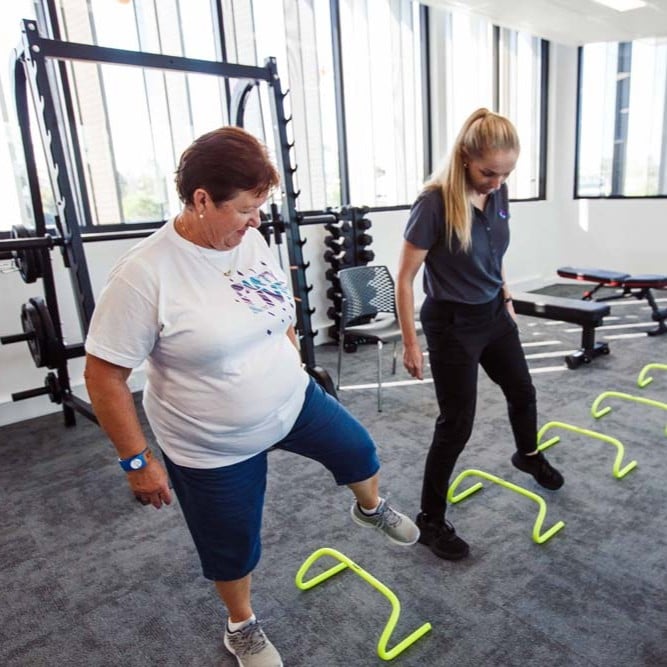
Health professionals are well placed to provide general physical activity advice on the types and amount of activity appropriate for an individual’s goals, needs, abilities, conditions, preferences, functional limitations, medication regimes and treatment within their scope of practice. For more specific physical activity advice, exercise specialists (e.g. physiotherapists, exercise physiologists, sports medicine physicians) should be consulted.2
Consider the case for physical activity promotion within healthcare:
- Health professionals perceive that physical activity promotion is part of their role.3 All health professionals have the capability to promote physical activity across all healthcare settings (primary, secondary, tertiary) for both the primary and secondary prevention of ill health and disease. However, only 16% of nursing and allied health professionals surveyed in Australia were able to describe the physical activity guidelines accurately, potentially limiting their ability to take advantage of physical activity promotion opportunities.4
- Healthcare consumers want physical activity advice from their health professional, but few receive this.5,6
- In Australia, $2.4 billion was spent on health conditions associated with physical inactivity in 2018–19.7 Given the large number of healthcare consumers who access the healthcare sector, promotion of physical activity by healthcare workers across all healthcare settings has the potential to broadly increase population physical activity and consequently reduce healthcare costs.
- Using the full spectrum of healthcare settings to promote physical activity supports the World Health Organization’s (WHO) report on Sustainable Development Goals and equitable access to high value care.1,8 This is alongside a host of co-benefits, such as decreasing environmental pollution, mitigating climate change, and alleviating the cost of living through more affordable transportation alternatives.
- It is estimated that if physical inactivity levels do not decrease globally by 2030 there will be 500 million new cases of preventable long-term conditions, resulting in more than 520 billion international dollars of direct healthcare costs.9
What is working well to incorporate physical activity into routine healthcare?
Positive changes have been implemented within the healthcare sector across Australia to improve physical activity promotion within healthcare settings. Examples of these are detailed in the following points.
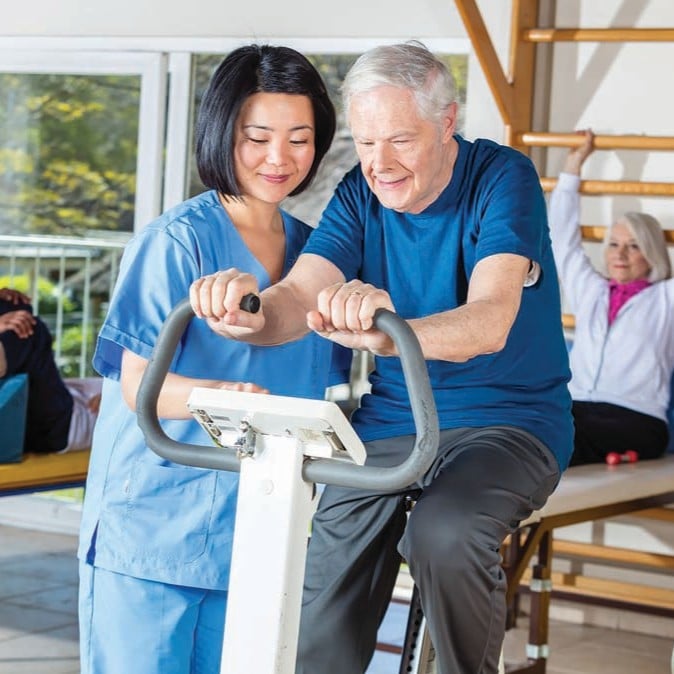
- In recent years, several important shifts have occurred in how physical activity is integrated into Australian healthcare. These reflect national and global strategies, such as Australia’s National Preventive Health Strategy 2021–2030 and the WHO Global action plan for physical activity (GAPPA), which call for a stronger focus on prevention,8,10 improved monitoring and workforce training.
- The expansion of digital health, including telehealth,11 has supported contemporary care models, where health professionals provide physical activity support through digital platforms like apps and remote monitoring, with demonstrated positive impacts on physical activity and health outcomes.12-14
- There is also a growing focus on embedding physical activity into routine care. For example, registries such as Australia’s Cystic Fibrosis Data Registry prompt health professionals to assess and record physical activity,15 supporting clinical decisions and national surveillance and is well-aligned with calls for better monitoring.10
- Workforce capacity is improving through the inclusion of physical activity in pre-service curricula16 and ongoing upskilling through programs like Exercise is Medicine® Australia.17
- Finally, improved access to resources and referral pathways has strengthened the link between healthcare and community-based programs, such as the Heart Foundation’s Walking program,18 supporting long-term engagement in physical activity beyond the healthcare setting.
Case studies
The following case studies showcase healthcare programs, partnerships and system-level approaches that are working well to embed physical activity into routine care and practice.
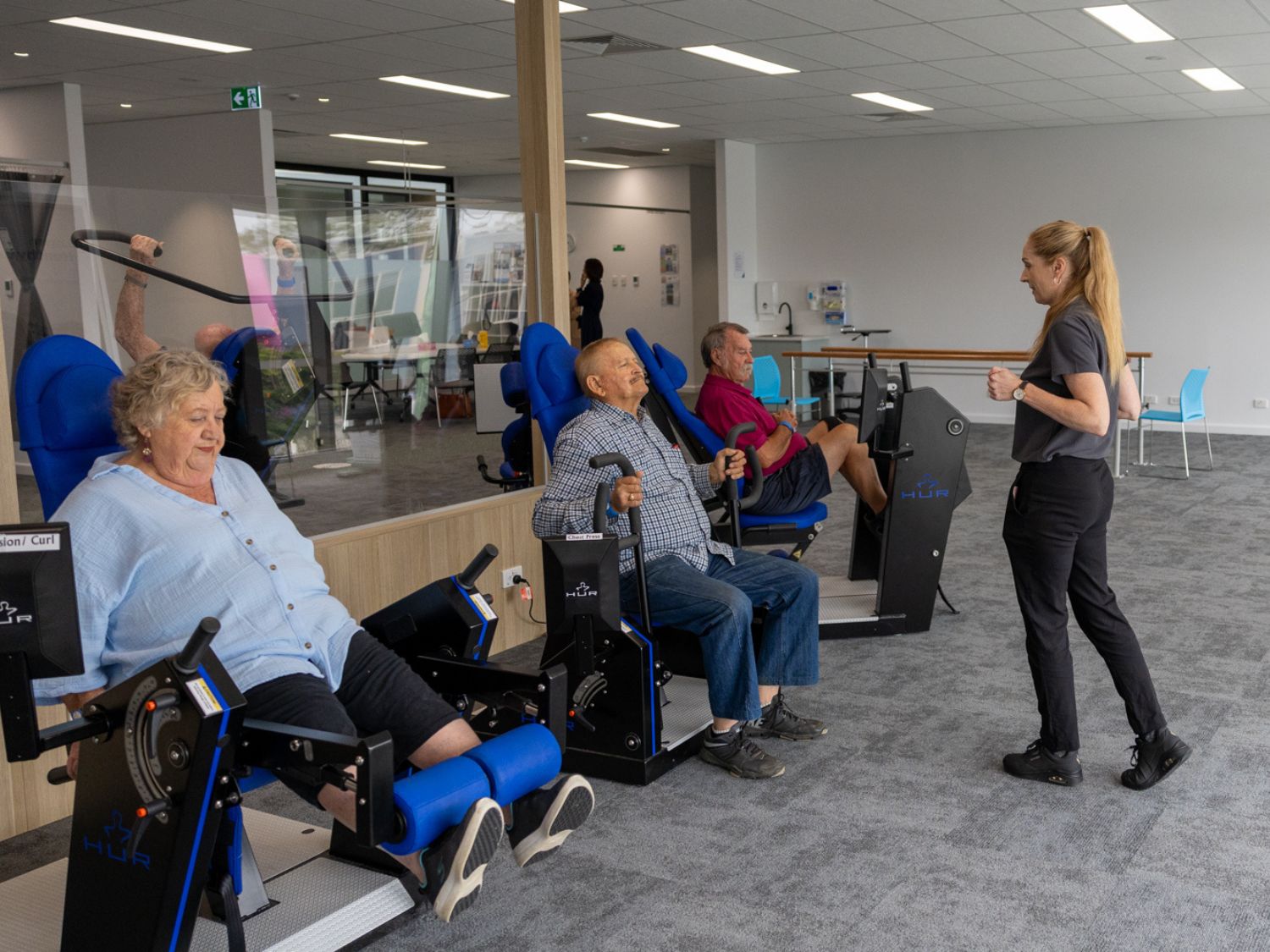
Logan healthy living
A no-cost, community program that provides people with, or at risk of, type 2 diabetes with group education and supervised exercise. It supports sustained physical activity and community engagement.

Physical activity data in the Australian Cystic Fibrosis Data Registry
Australia's Cystic Fibrosis Data Registry now captures physical activity and physiotherapy measures to improve care, research and evidence-informed decisions.
What must be done to incorporate physical activity into routine healthcare?
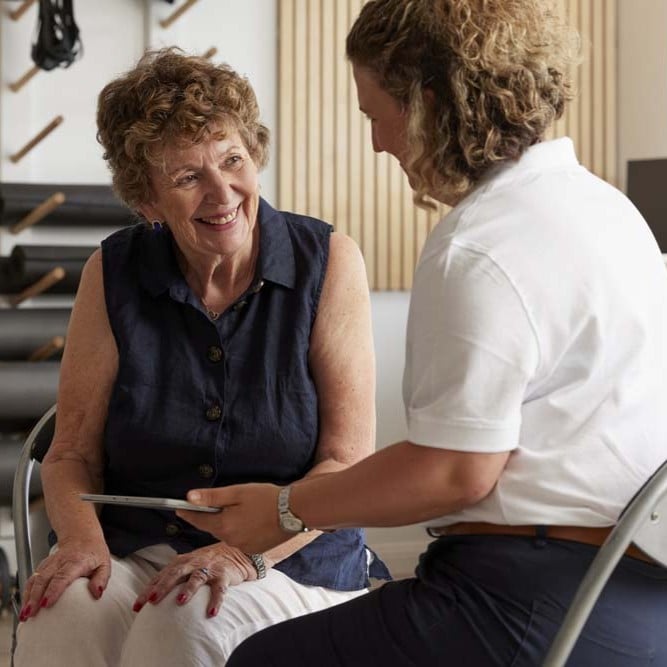
The healthcare sector is uniquely placed to engage and support people of all ages, cultural and socioeconomic backgrounds through contact in primary, secondary and tertiary healthcare settings. As such, it provides a broad-reaching platform for physical activity promotion. The recommendations below build on the evidence presented in this action area, including research on the role and training of health professionals, consumers’ call for physical activity advice, the costs of physical inactivity, and system changes that are working well, such as telehealth, data registries and referral pathways. Where published evidence is limited, recommendations reflect expert consensus.
Policy, practice and leadership
- Governments and professional organisations should develop and implement policies and clinical guidelines. Policies should include guidelines on how to assess physical activity and deliver evidence-informed physical activity advice in routine practice. This aligns with the National Preventive Health Strategy and GAPPA, which both call for improved monitoring and a stronger focus on prevention,8,10 and with registries that already prompt health professionals to record physical activity.15
- Health professionals should foster collaboration within and outside the healthcare sector to support people to make behavioural changes to increase physical activity. Connections between the healthcare sector and other community-based physical activity programs should also be strengthened.19 Referral pathways to programs such as Heart Foundation Walking can support long-term engagement beyond the healthcare setting.18
Organisation and service delivery
- Health professionals should be supported to provide physical activity advice in primary care settings using federal government funding mechanisms (e.g. the Medicare Benefits Schedule and/or the Practice Incentive Payment program). This could be through increased awareness and use of existing items (e.g. chronic disease care plans) or through establishing dedicated physical activity promotion items that are accessible by all primary care disciplines including general practice, nursing, midwifery and allied health.5,6,20,21
- Workforce
- All healthcare workers, including the peer support workforce, allied health assistants, Aboriginal and Torres Strait Islander and multicultural health workers, should be trained to support people to be more active.4 Only 16% of nursing and allied health professionals surveyed could accurately describe the physical activity guidelines.4
- Training organisations (e.g. universities, vocational training providers and peak bodies) should scaffold physical activity promotion across healthcare workers’ careers, from foundational competencies in undergraduate and vocational education through to ongoing professional development.16,17
- All healthcare workers should receive training in physical activity promotion foundation competencies,2 while understanding the importance of appropriate referral to exercise specialists (e.g. physiotherapists, exercise physiologists, sports medicine physicians) when extended support is required.
Community awareness and engagement
- Governments should invest in public health campaigns that raise awareness of the benefits of physical activity for both prevention and management of health conditions, and that empower consumers to seek physical activity advice from their healthcare providers.5,6 Co-design campaigns and resources with consumers to ensure that materials are inclusive and culturally responsive.22,23
Research, data and innovation
- A review of the evidence for this action area identified the following priorities for investment in research, data and innovation.
- Leverage digital health infrastructure to support and scale-up physical activity promotion in healthcare settings. This could include expanding the use of decision-support systems, automated prompts, telephone coaching and remote monitoring (wearables) to support healthcare workers to deliver tailored advice and follow-up for physical activity behaviour change. Governments and organisations should invest in innovation and research to evaluate the impact of digital health solutions in diverse healthcare settings.
- Improve understanding of which implementation strategies are most effective in healthcare systems. For example, exploring whether system-level interventions (decision-support prompts, performance incentives, leadership engagement) effectively embed physical activity promotion in routine practice and identifying which contextual factors (organisational culture, resource constraints, team composition) influence fidelity, sustainability and scale-up.
- Improve understanding of the physical activity promotion training landscape for healthcare workers. Research should explore the consistency of training across disciplines, barriers to uptake, reach and the impact of training on knowledge, skills, confidence and practice change. The comparative effectiveness of different workforce training models should be evaluated.
- Rigorously evaluate physical activity promotion initiatives in healthcare settings in terms of changes to healthcare worker practice, changes in consumer physical activity participation and cost efficiency and effectiveness.
- Standardise and integrate physical activity monitoring and surveillance into routine care. Research should explore how innovative technological solutions could enable accurate, accessible and secure data collection, and sharing among healthcare professionals and sectors. Ideally, these physical activity measures would be integrated into electronic records and minimum data sets to support benchmarking, evaluation and reporting, while ensuring privacy and interoperability.
References
1. United Nations. Sustainable Development Goals. Accessed 6 July 2026. https://sdgs.un.org/goals
2. Alsop T, Lehman E, Brauer S, et al. What should all health professionals know about movement behaviour change? An international Delphi-based consensus statement. Br J Sports Med. 2023;57(22):1419–1427. doi:10.1136/bjsports-2023-106870
3. Albert FA, Crowe MJ, Malau-Aduli AEO, Malau-Aduli BS. Physical activity promotion: a systematic review of the perceptions of healthcare professionals. Int J Environ Res Public Health. 2020;17(12):4358. doi:10.3390/ijerph17124358
4. Freene N, Cools S, Hills D, Bissett B, Pumpa K, Cooper G. A wake-up call for physical activity promotion in Australia: results from a survey of Australian nursing and allied health professionals. Aust Health Rev. 2019;43(2):165–170. doi:10.1071/AH16240
5. Falskog F, Landsem AM, Meland E, Bjorvatn B, Hjelle OP, Mildestvedt T. Patients want their doctors’ help to increase physical activity: a cross sectional study in general practice. Scand J Prim Health Care. 2021;39(2):131–138. doi:10.1080/02813432.2021.1910670
6. Kunstler B, Fuller R, Pervan S, Merolli M. Australian adults expect physiotherapists to provide physical activity advice: a survey. J Physiother. 2019;65(4):230–236. doi:10.1016/j.jphys.2019.08.002
7. Australian Institute of Health and Welfare. Economics of sport and physical activity participation and injury. 2023. Accessed 15 October 2025. https://www.aihw.gov.au/reports/sports-injury/economics-of-sport-and-physical-activity/contents/total-cost-of-physical-inactivity-and-related-risk
8. Australian Government, Department of Health, Disability and Ageing. National Preventive Health Strategy 2021–2030. 2021. https://www.health.gov.au/resources/publications/national-preventive-health-strategy-2021-2030
9. Santos AC, Willumsen J, Meheus F, Ilbawi A, Bull FC. The cost of inaction on physical inactivity to public health-care systems: a population-attributable fraction analysis. Lancet Glob Health. 2023;11(1):e32–e39. doi:10.1016/S2214-109X(22)00464-8
10. World Health Organization. Global Action Plan on Physical Activity 2018–2030: more active people for a healthier world. 2018. https://www.who.int/publications/i/item/9789241514187
11. Owen PJ, Keating SE, Askew CD, et al. Impact of the COVID-19 pandemic on exercise physiology services in Australia: a retrospective audit. Sports Med Open. 2022;8(1):94. doi:10.1186/s40798-022-00483-2
12. Kardan M, Jung A, Iqbal M, Keshtkar S, Geidl W, Pfeifer K. Efficacy of digital interventions on physical activity promotion in individuals with noncommunicable diseases: an overview of systematic reviews. BMC Digit Health. 2024;2(1):40. doi:10.1186/s44247-024-00097-6
13. Grout L, Telfer K, Wilson N, Cleghorn C, Mizdrak A. Prescribing smartphone apps for physical activity promotion in primary care: modeling study of health gain and cost savings. J Med Internet Res. 2021;23(12):e31702. doi:10.2196/31702
14. Szeto K, Arnold J, Singh B, Gower B, Simpson CEM, Maher C. Interventions using wearable activity trackers to improve patient physical activity and other outcomes in adults who are hospitalized: a systematic review and meta-analysis. JAMA Netw Open. 2023;6(6):e2318478. doi:10.1001/jamanetworkopen.2023.18478
15. Potter A, Pancholi B, Smith L, Maher C. Should the physiotherapy outcomes airway clearance, physical activity and fitness be recorded on the Australian Cystic Fibrosis Data Registry? A consensus approach. BMC Pulm Med. 2021;21(1):298. doi:10.1186/s12890-021-01669-2
16. Freene N, Porra K, Bousie JA, et al. Australian university nursing and allied health students’ and staff physical activity promotion preparedness and knowledge: a pre-post study using an educational intervention. Int J Environ Res Public Health. 2022;19(15):9255. doi:10.3390/ijerph19159255
17. Exercise & Sports Science Australia. Exercise is Medicine Australia. Accessed 15 October 2025. https://exerciseismedicine.org.au/
18. National Heart Foundation of Australia. Heart Foundation Walking. 2024. Accessed 15 October 2025. https://walking.heartfoundation.org.au/
19. Pavey TG, Taylor AH, Fox KR, et al. Effect of exercise referral schemes in primary care on physical activity and improving health outcomes: systematic review and meta-analysis. BMJ. 2011;343:d6462. doi:10.1136/bmj.d6462
20. Kettle VE, Madigan CD, Coombe A, et al. Effectiveness of physical activity interventions delivered or prompted by health professionals in primary care settings: systematic review and meta-analysis of randomised controlled trials. BMJ. 2022;376:e068465. doi:10.1136/bmj-2021-068465
21. Craike M, Klepac Pogrmilovic B, Calder R. Supporting physical activity promotion in primary health care. 2020. https://vuir.vu.edu.au/41164/
22. Lederman O, Moors-Mailei A, Peacock Y, et al. Developing a co-designed, culturally responsive physical activity program for Pasifika communities in Western Sydney, Australia. Health Promot Int. 2025;40(1):daae197. doi:10.1093/heapro/daae197
23. McKeon G, Curtis J, Rostami R, et al. Co-designing a physical activity service for refugees and asylum seekers using an experience-based co-design framework. J Immigr Minor Health. 2024;26(4):674–688. doi:10.1007/s10903-024-01587-5
Heart Foundation related information for healthcare


Education and childcare
Workplaces