Western Sydney Moving
A systems-wide initiative tackling inactivity and inequity in Western Sydney
Background and rationale
WSYD Moving was established in response to the urgent need for a coordinated systemic approach to address complex health challenges in Western Sydney. WSYD Moving is a systems oriented, community-based, non-governmental organisation dedicated to driving systemic changes to increase physical activity and improve well-being in Western Sydney.
Originally launched as an initiative of the social enterprise Collective Leisure, WSYD Moving has since evolved into an independent registered Health Promotion Charity, enabling it to scale its impact and strengthen its systems-based approach.
At its heart, WSYD Moving is a growing network that brings together more than 600 practitioners, academics, and researchers across over 130 organisations, demonstrating a genuine movement for movement across Western Sydney.
WSYD Moving draws on the Australian Systems Approaches to Physical Activity (ASAPa) project (and its successor ASAPa+) led by the University of Sydney and now serves as a practical living laboratory for putting systems approaches into action. WSYD Moving also draws inspiration from international models such as Greater Manchester Moving, demonstrating how a place-based, whole-of-system approach can transform physical activity levels at scale.
To strengthen its evidence base and advocacy, WSYD Moving worked with Western Sydney University to co-author the white paper Tackling inactivity and inequity in Western Sydney: a systems approach,1 and continues to work closely with university partners for evaluation. These academic collaborations ensure WSYD Moving is both research-informed and impact-driven.
Key initiatives include
- Local active partnerships (LAP) – place-based collaborations uniting partners at the local government area level. The first LAP was launched in Liverpool in December 2024, with Camden established in October 2025 with Blacktown and Blue Mountains established in June 2026
- Community of practice – a virtual bi-monthly forum commenced in June 2022 bringing together practitioners, academics, and researchers to share best-practice approaches to promote physical activity and foster collaboration across the region.
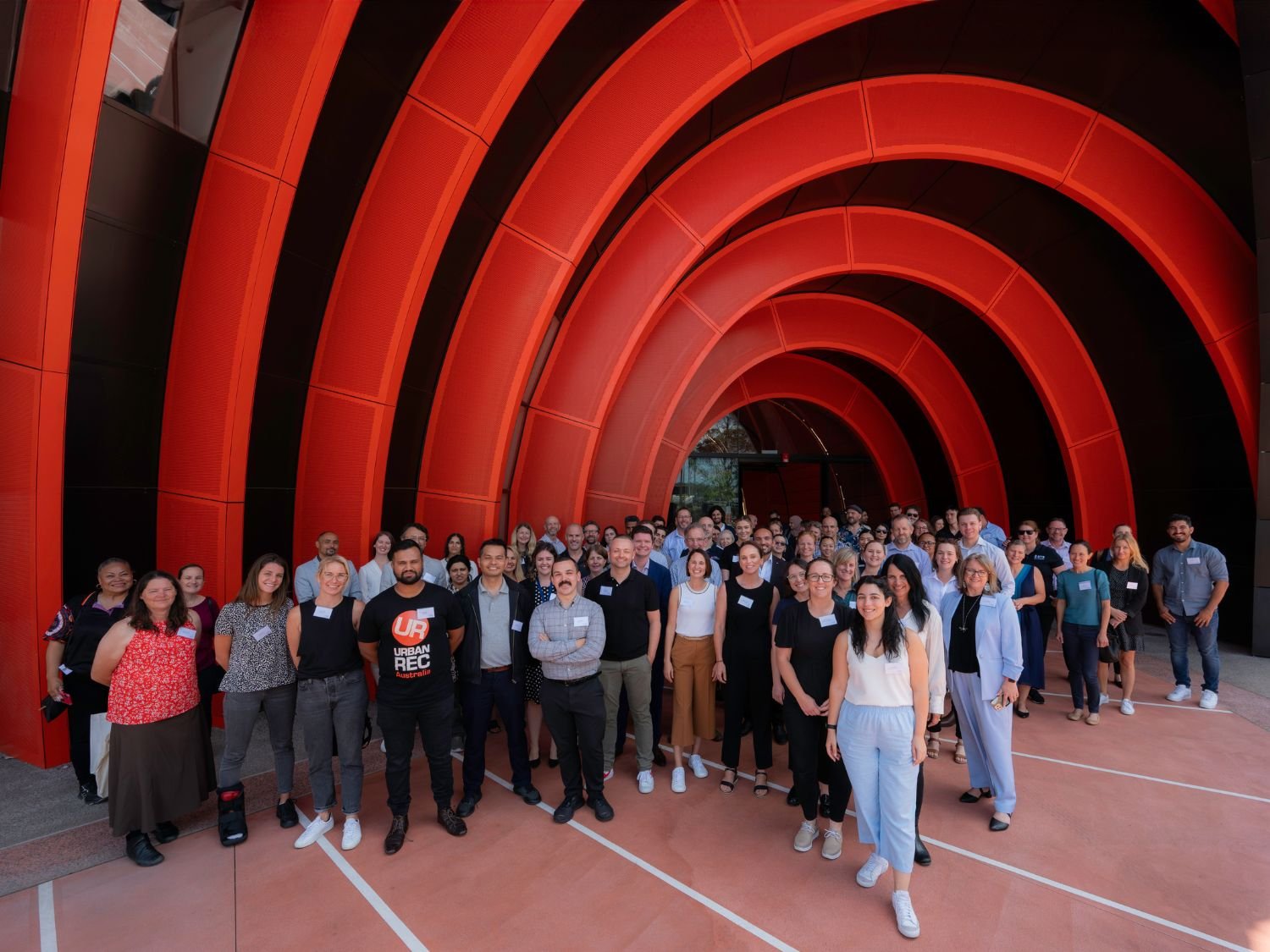
- WSYD Moving symposium – recognised as Western Sydney’s leading event for building a healthier community, growing from 104 delegates in 2023 to 208 delegates in 2025.
- Systems Leadership Program – Launched in February 2026, 21 cross-sector participants (selected through an EOI process) were selected for a 9-month place-based systems leadership program. The program is designed to build capability to navigate complexity and drive coordinated action on physical activity and health inequity. This includes Applied Learning Projects creating ripples of change across Western Sydney. (Photo Attached)
- NSW Government Support – At the 2025 WSYD Moving Symposium, NSW Health Minister Ryan Park announced a $50,000 contribution to WSYD Moving to establish a 12-month systems mobilisation to convene local partners and diagnose barriers and enablers to physical activity. This funding will support generation of a practical, evidence-based logic model linking systems-based partnerships with physical activity participation and downstream health, social and economic outcomes.
Outcomes and impact
WSYD Moving has rapidly gained recognition as a catalyst for system-wide change in tackling inactivity and inequity as a systems-oriented Health Promotion Charity.
- Population reach – engaged network of organisations across health, sport, government, and community sectors.
- Knowledge exchange – more than 23 community of practice forums convened since June 2022, driving ongoing cross-sector collaboration, building trust and relationships.
- Thought leadership – co-authored white paper adopted as a roadmap for policy, funding, and program alignment in Western Sydney.
- Growth in engagement – symposium delegate numbers have more than doubled from 104 (2023) to 165 (2024), to 208 (2025) with more than 250 projected in 2026.
- Building system capacity – the systems leadership program, launched at the 2025 symposium, represents a step-change in building regional capability. By equipping leaders with the tools to work collaboratively across silos, WSYD Moving is embedding systems leadership at the local level – a critical enabler for sustainable population health impact.
Beyond physical activity participation, WSYD Moving is fostering social connection, systems leadership, and long-term prevention strategies, addressing the $1.5 billion annual cost of inactivity in Western Sydney1. Its evidence-based and collaborative model is positioning the region as a national leader in health equity.
Investment and funding
WSYD Moving’s establishment was supported pro bono through certified social enterprise Collective Leisure. Event delivery (e.g. symposium) is funded through sponsorship and partnership support from health districts, primary health networks, local government, and sport. Foundational funding has been provided by NSW Government for the 12-month mobilisation project. The initiative now seeks sustainable investment to scale LAP across all 13 local government areas of Western Sydney.
Enablers and lessons learned
- Collaboration is key – success has been driven by building trust and relationships across sectors and partners.
- Evidence strengthens advocacy – the white paper has provided a credible, shared roadmap for change.
- Leadership and evaluation matters – positioning WSYD Moving as a living lab of ASAPa+ embedding systems science into practice.
Challenges of funding
Early work was entirely pro bono, highlighting the need for sustainable funding and resourcing to meet growing demand.
- Progress over perfection – starting small, learning by doing, and following where the energy and momentum naturally build.
- Lesson – “Start small, prove impact and scale up” Liverpool, Camden, Blue Mountains and Blacktown LAPs show the model is replicable and can expand across Western Sydney.
- Capacity in the system – moving from competition to collaboration, unlocking untapped resources and strengths across partners.
Opportunities for scale up
- Coordination is key – We can’t solve a system problem with fragmented solutions, siloed funding and poor coordination across sectors. Systems problems must break down barriers that result in siloed funding, fragmented solutions and lack of coordination across programs.
- Collaboration over competition- Focus on aligning efforts across sectors rather than creating more standalone programs.
- See the larger system – Organisation looking beyond themselves. Understanding patterns, relationships and root causes of inactive communities.
- Build trust across boundaries - Investing in relationships across sectors. Collaboration requires trust between organisations and communities.
- Build systems leadership capability - Build the leadership capability to move from siloed delivery to coordinated system action, empowering local spark plugs to create ripples and grow the ‘movement for movement’.
Further information
References
1. Burns D, Smith A, Perry N, Tammas R, Itaoui R. Tackling inactivity and inequity in Western Sydney: a systems approach. 2024. doi.org/10.26183/zptf-gq70.
Last updated21 October 2026