
Get the Blueprint
Blueprint 4th edition (PDF or Print) - Register your interest

Blueprint for an Active Australia
Action area 5: Built environments
Authors: Tracy Kolbe-Alexander, Anna Timperio, Jenny Veitch, Anthony Kimpton, Susan Paudel, Hayley Christian, Michael Slee, Natalia Krysiak
Key messages
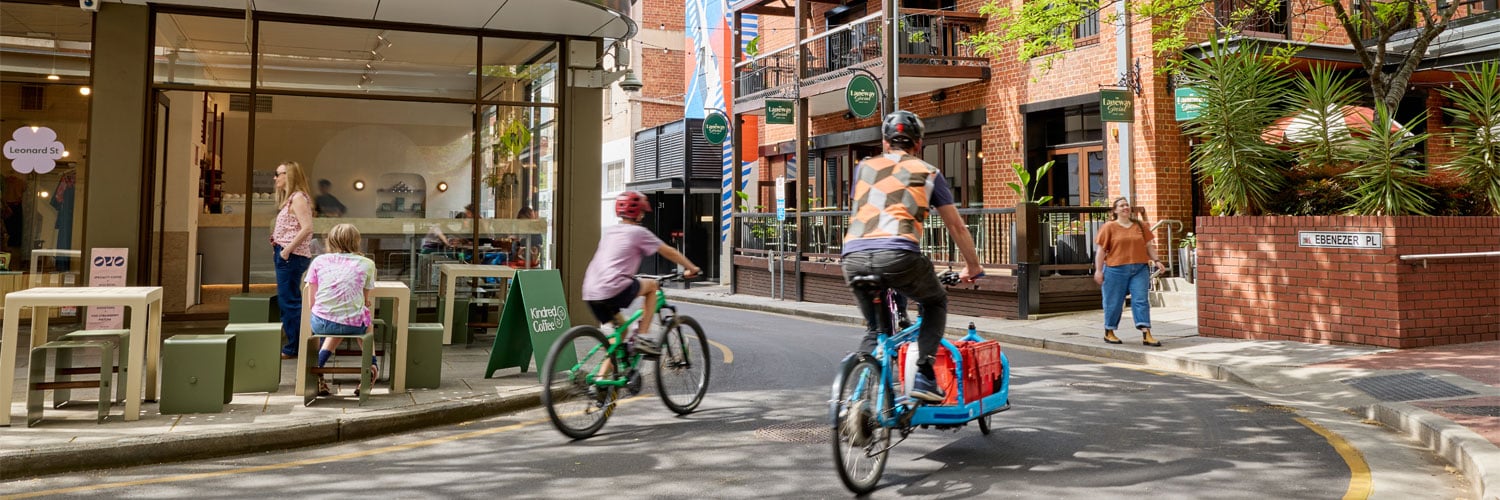
Well-designed built environments for our neighbourhoods, towns and cities support physical activity. Medium density housing with a good mix of homes, shops, services and parks, well connected streets, access to public transport, and safe and shaded walking and bike riding infrastructure all support being active.
Design principles that support physical activity have been developed and are being applied in Australia. Built environment indicator scorecards have been developed and, along with open access spatial data platforms, are used to inform policy and planning.
Though these principles have been taken up, there is still much to be done to support environments that enable physical activity for all people in Australia.
Strategic priorities
Key strategic built environment priorities to support physical activity:
- Embed healthy planning principles and minimum thresholds for built environment indicators of active living into policy, regulation and practice at all levels of government.
- Strengthen collaboration across land use, transport, health and infrastructure sectors, including multidisciplinary teams involved in the planning and design of healthy built environments, guided by evidence-informed policy guidelines.
Sustainable Development Goals
The United Nations Sustainable Development Goals1 that relate to built environments to support physical activity include:

For more information see Appendix 1
Why is the built environment an important setting for physical activity?
The design of neighbourhoods, towns and cities can increase levels of physical activity.2
A range of urban design features are linked to higher levels of physical activity.3,4 These include:
- higher residential density
- a mix of land uses
- well-connected streets
- destinations close to home
- infrastructure for walking and bike riding
- urban greening and parks
- access to public transport.
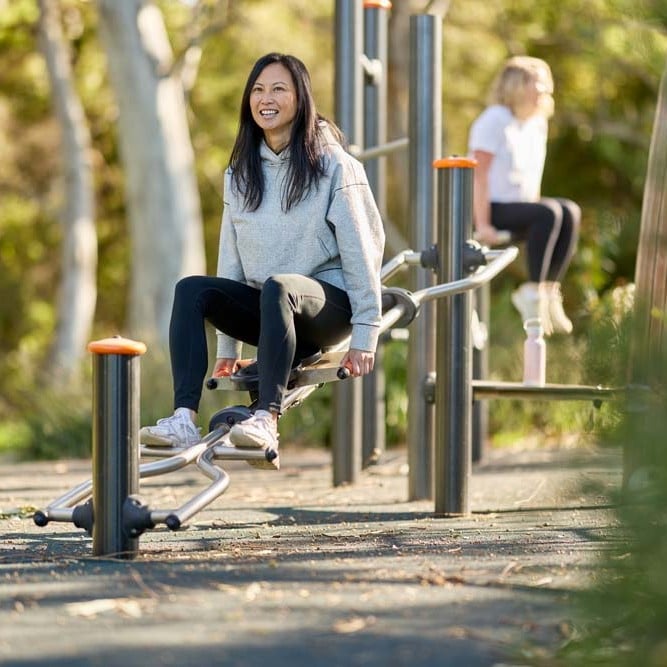
Well-designed public spaces and neighbourhood centres encourage residents to engage in physical activity and promote social connections.5
International research has identified the urban design thresholds at which people are more likely to walk for transport. These include neighbourhoods with: 3
- more than 5,700 people per km2
- 100 street intersections per km2
- 25 public transport stops per km2
- parks close by.
These urban design features also increase the likelihood of people meeting physical activity guidelines.3,6
Consider the supporting evidence:
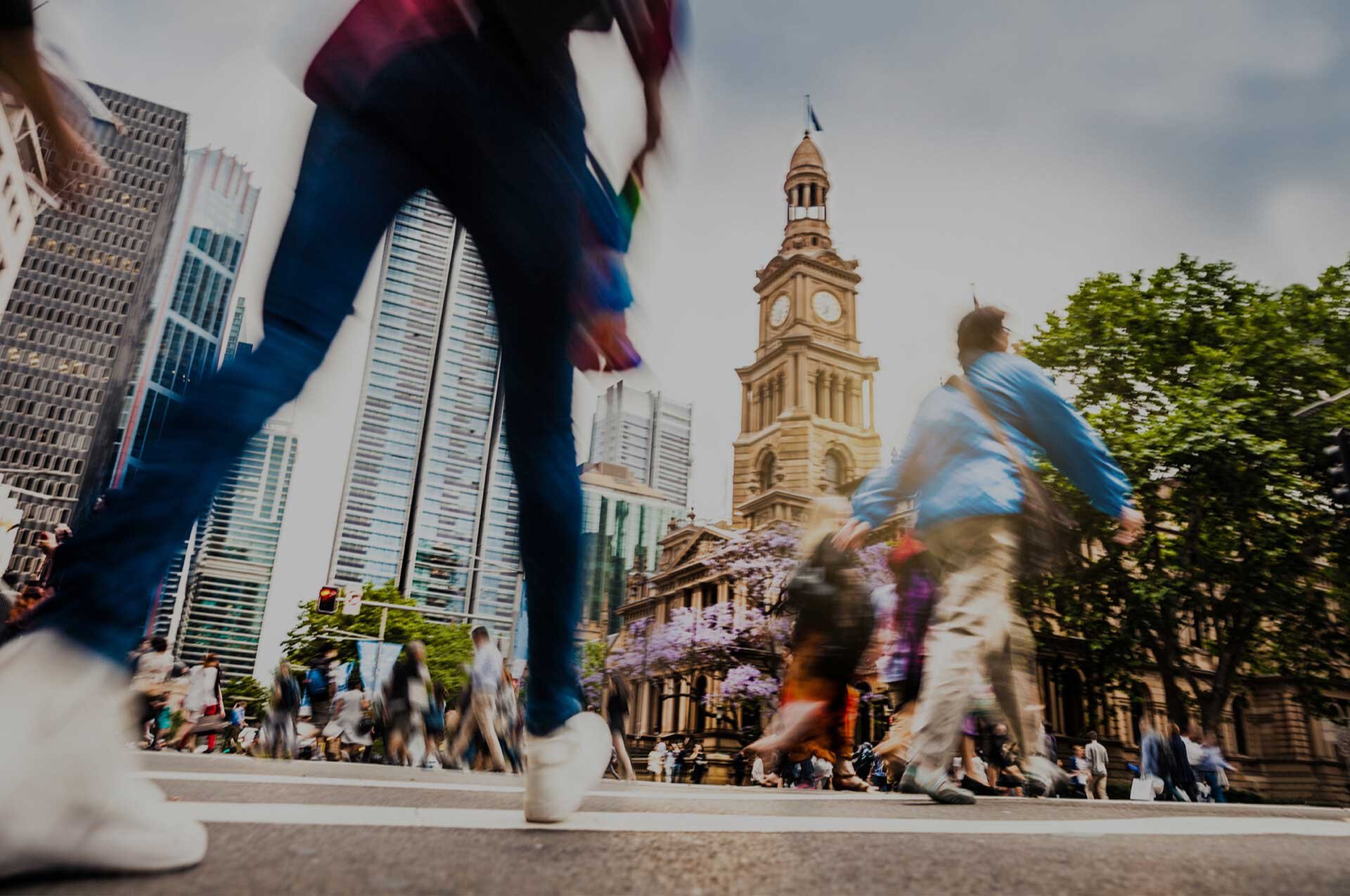
- Compact (high density) and walkable neighbourhoods, towns and cities support physical activity, which in turn reduces the risk of non-communicable diseases.6 Fifteen-minute cities and 20-minute neighbourhoods, characterised by increased walkability, urban density and land use mix, ensure that most daily needs are accessible by active or public transport.7,8 An Australian study showed that 20 minutes equates with walking 800 m to reach destinations,8 and a benchmark of 35 dwellings per hectare over a 1 km radius is required to promote active transport.8 Co-benefits of 15/20‑minute cities/neighbourhoods include improvements in community connections, and reduced loneliness.3,9 Furthermore, the economic benefits of high density neighbourhoods include increased local employment and retail trade.10 However, the evidence indicates that ‘more is not always better’: increases in urban density and connectivity are associated with higher walking levels up to an optimal range, after which additional gains are limited. Indicative upper thresholds are around 21,000–22,000 people/km², 334–356 intersections/km² and 60 public transport stops/km².3
- Many cities, including Melbourne, have adopted 20‑minute neighbourhoods as part of efforts to ‘build back better’, a shift accelerated by the COVID‑19 pandemic, when lockdowns made local neighbourhoods central to daily life, these planning policies incorporate improved standards that support better health outcomes.9,11-13
- Urban greening and streetscapes with good tree canopy cover provide attractive settings for walking and are associated with increased physical activity,14,15 mental health and wellbeing.6,16-18 Greenspace also mitigates the effects of climate change by absorbing greenhouse gas emissions and reducing urban heat island effects.6 Tree canopies help to decrease UV exposure, making walking and cycling more comfortable and sun smart,19,20 and shade also plays a role in urban cooling, and can reduce surface temperatures by up to 19°C.20 Co-benefits of greenspaces are that they provide venues for social gatherings and opportunities for contact with nature which also support mental health.21
- Parks provide spaces for physical activity and recreation for all age groups.22-24 Well-designed and maintained spaces, such as off leash dog exercise areas, playgrounds, and outdoor exercise equipment support increased numbers of park visitors and encourage social cohesion. This increases the sense of place and social connectedness and reduces loneliness.22,24,25
- Walkable or cyclable urban design supports mode shifts from motorised vehicles to active and public transport and reduced greenhouse gas emissions. Internationally, motorised transport contributes approximately 24% of greenhouse gas emissions in cities.6 Reducing motor vehicle use will help Australia to reduce emissions,3,26 in line with the Australian Government’s Net Zero infrastructure and transport policy.27 Fifteen/20-minute cities/neighbourhoods, with improved infrastructure for walking, bike riding and wheeling, will also decrease exposure to environmental stressors such as air and noise pollution.
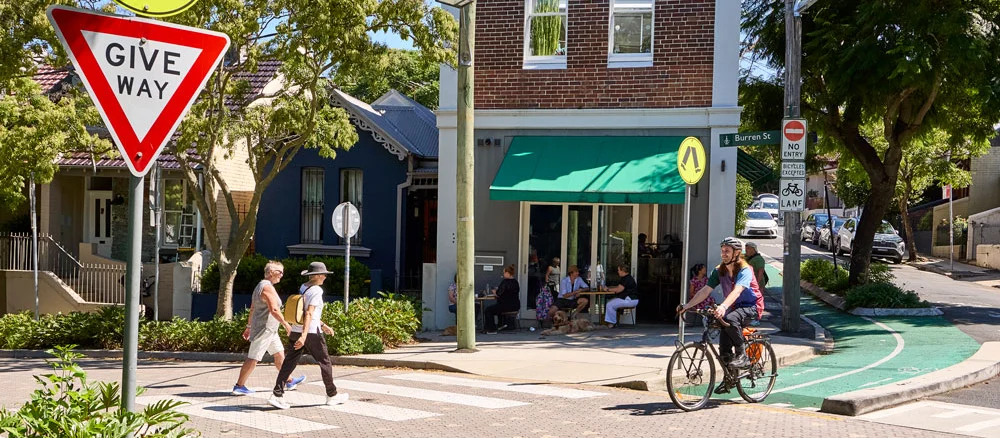
- Infrastructure that supports safe walking, wheeling, and bike riding encourages engagement in active transport and physical activity.18,28,29 Perceptions of safety should be considered when designing public spaces and pathways to support transport and recreational walking and bike riding. This is especially important for women, girls and gender diverse people who are less likely to spend time in public places, streets and transport hubs than men because they feel unsafe.30 Research shows that one in two women do not feel safe walking home at night, compared with one in five men.31 Crime prevention through environmental design (CPTED) (including closed-circuit TV, lighting, sight lines, active street frontages, passive surveillance and attractive features) reduces both perceived and reported crime, resulting in greater visitation and engagement in physical activity.32,33 In turn, increased visitation provides more ‘eyes on the street’ or natural surveillance which, may improve perceived and actual safety.34
What is working well to enable more physical activity in built environments?
A variety of evidence-based recommendations for the design of neighbourhoods, towns and cities have been developed and, in many places, are being applied. This includes 15/20-minute city/neighbourhood principles with active travel incorporated into city development and transport plans. Open access spatial data platforms and indicator scorecards have been developed to inform policy and planning. The following points provide more detail on what is working well.
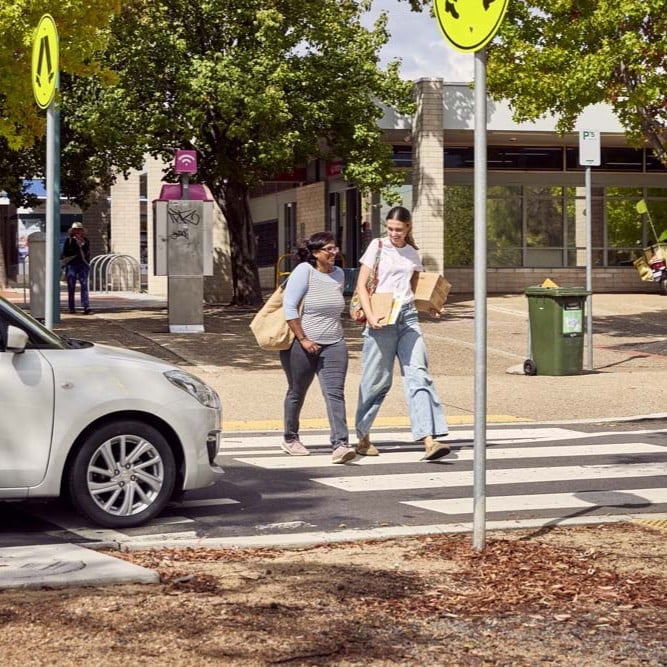
- Dedicated infrastructure for walking and bike riding for both transport and recreation is increasing in some parts of Australia. Infrastructure in many states and jurisdictions provides dedicated walking and bike riding networks that connect local street networks, off-road bike paths, and secure bike parking at transit hubs. This infrastructure investment plays a vital role in promoting daily physical activity. Examples include the GoldLinQ bike shelters at key locations along the new Gold Coast light rail system,35 and the 90 km foreshore walking and riding path from Sydney Opera House to Parramatta Park in NSW.36
- Across Australia, a number of states and councils have embraced the 15/20‑minute city/neighbourhood principles. For example, NSW’s Greater Sydney Region Plan37 aims for higher-order (specialist) goods, services, and workplaces to be reached within 30-minutes by any mode. Similarly, Victoria’s Plan Melbourne incorporates the 20-minute neighbourhood which aims for everyday goods, services, and recreation to be reached in 20 minutes by active or public transport.38 Some recent council plans have 20‑minute city and 10‑minute neighbourhood principles underpinning their transport planning aims, for example, iGO: City of Ipswich Transport Strategy.39
- The availability of open access platforms and data like OpenStreetMap and Global Human Settlement Layer support policy makers to explore spatial indicators including street connectivity, speeds, and conditions that may then be used in urban planning to address inequities in health, plan supportive environments and monitor interventions.6,40 Furthermore, the Global Healthy and Sustainable City Indicator, an integrated open-source toolkit, has recently been developed to support local councils and stakeholders to calculate urban indicators for their cities and towns.40
- The Australian Urban Observatory assesses liveability in 8 capital and 13 regional cities, representing approximately 70% of the population of Australia.41 Scorecards have been produced for each city, based on indicators such as social infrastructure, walkability, transport, public open space and housing. These scorecards provide city-wide results, facilitating intra-city comparison, and informing policy implementation and evaluation.41
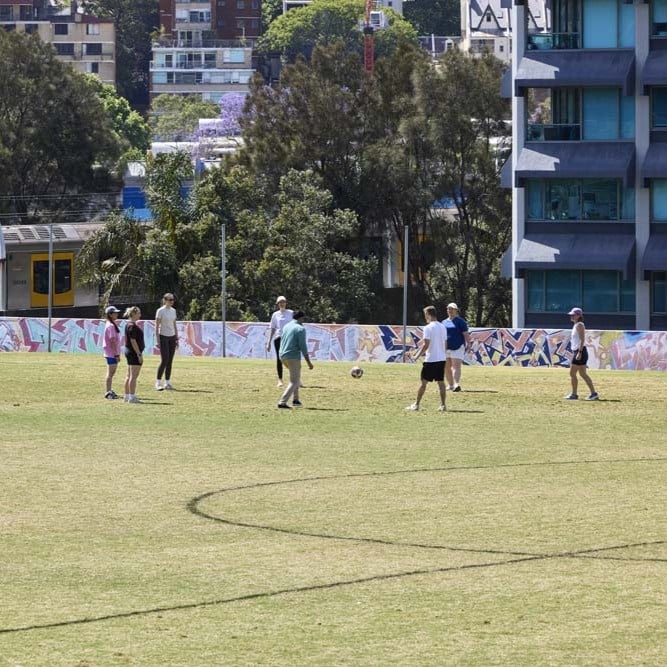
- Outdoor fitness equipment installed in parks offers free and accessible opportunities for people of all ages and from different cultural backgrounds to engage in physical activity. These installations have been shown to increase park visitation and overall physical activity levels.42,43 The installation of new children’s playgrounds forming part of a park refurbishment in Melbourne resulted in increased moderate to vigorous intensity physical activity among children.44
- Community skateparks provide inclusive, youth-friendly spaces that promote physical activity, skill development, and social engagement.45 They serve as important community hubs and help diversify opportunities for movement, particularly among adolescents. For example, Junction Skate and BMX Park in Hawthorn, Melbourne, offers free introductory skateboard, scooter and BMX lessons for all skill levels, private lessons, repair stations, a youth development program and safety lessons for schools.46 It is recognised as a key space for community building, physical activity, and youth engagement.
- South Australia’s Active Travel by Design Guide offers design principles tailored for integrated active travel and green infrastructure development.47 It supports practitioners to enhance design outcomes for walking and wheeling, simplifying the process of designing for active travel and promoting uniformity in outcomes across South Australia.
Case studies
The following case studies show how these principles and initiatives are being applied in practice to create built environments that support more active communities.
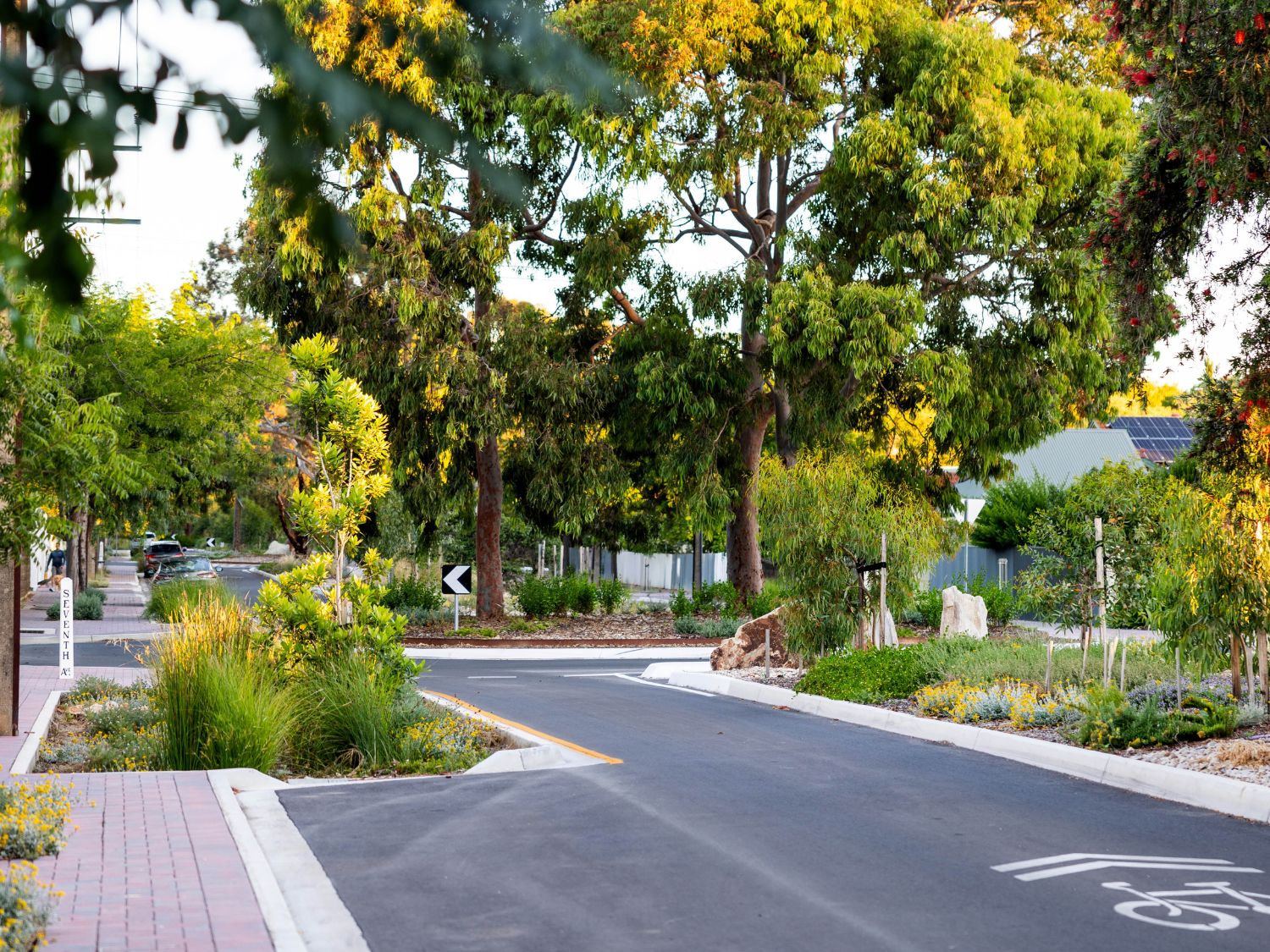
Greening Metropolitan Adelaide: A strategy for a cooler, leafier and more liveable city
A cross-sector strategy that aims to cool and green metropolitan Adelaide, restore biodiversity and achieve 30% urban tree canopy by 2055.
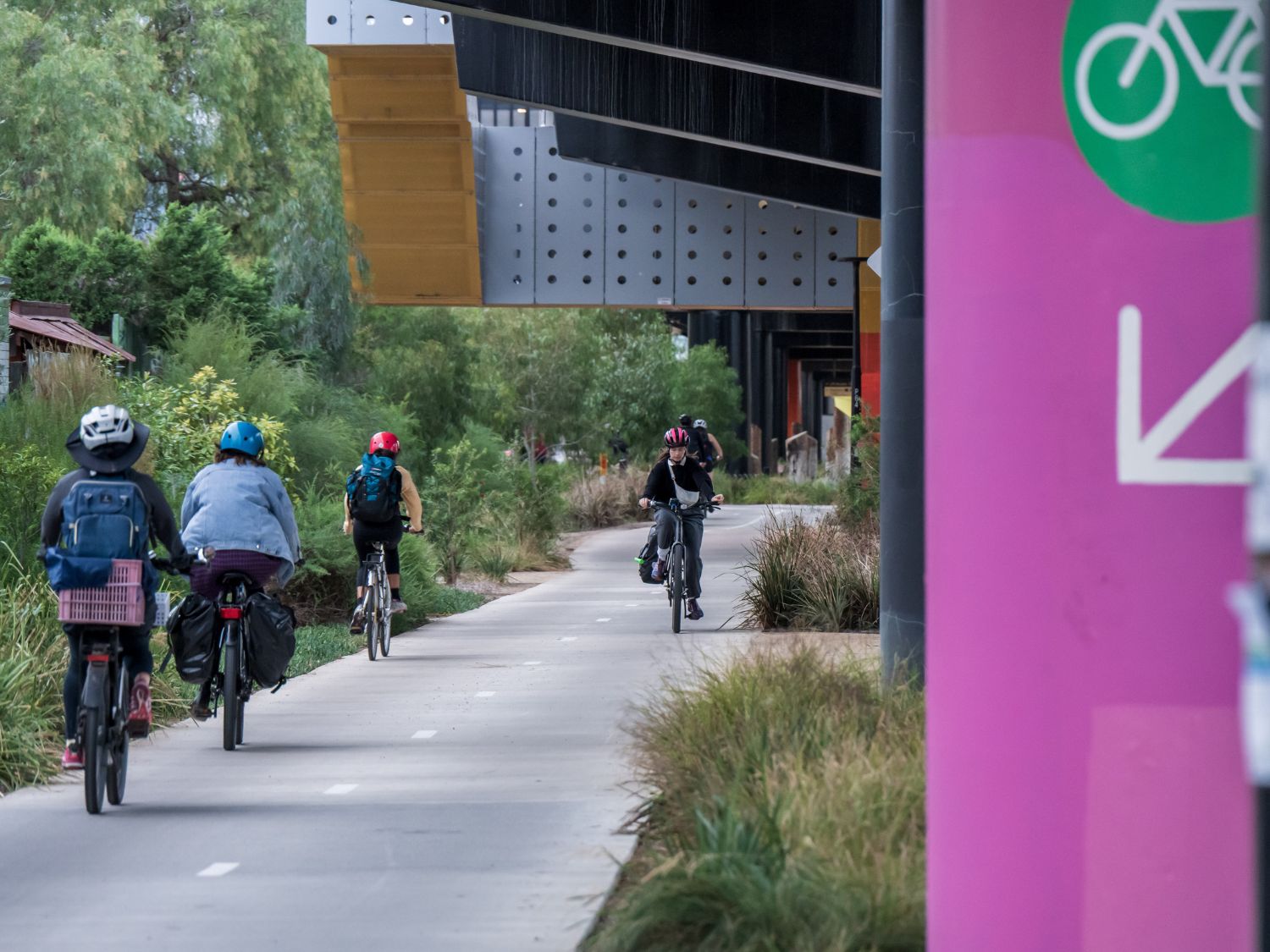
Embedding People and Place in Infrastructure Design
Free, evidence-based program helping people and workplaces move more through step tracking, goals and challenges.
What must be done to enable physical activity in built environments?
Various physical activity supportive design recommendations have been developed and there has been uptake of these within Australia. However, there is still much to be done to support the development of environments that enable physical activity for all people in Australia regardless of where they live. The recommendations below build on the evidence presented in this action area, including international research on urban design thresholds for walking, the health and co-benefits of compact, walkable and green neighbourhoods, safety and crime prevention through environmental design, and evaluations of park and infrastructure improvements. Where published evidence is limited, recommendations reflect expert consensus. The following strategies are recommended for ongoing improvement of the built environment within Australia.
Policy, practice and leadership
- Embed physical activity into all planning frameworks by establishing minimum standards, measurable targets and clear thresholds (e.g. density, intersection connectivity, lighting, tree canopy, safety).6,40,48
- Align with national targets such as those in the National Preventive Health Strategy,49 ensuring planning codes and regulations explicitly support active living.
- Accelerate safety-focused policies that improve natural surveillance, road safety for people walking, wheeling and bike riding, and equitable access to public spaces. Safe infrastructure encourages active transport,28,29 and crime prevention through environmental design increases visitation and physical activity.32,33
- Position health as a core outcome of urban and transport planning, ensuring equitable access to active environments for all communities. Compact, walkable neighbourhoods support physical activity and reduce the risk of non-communicable diseases.2,6
Urban design and planning
- Promote coordinated, compact and connected communities through co-designed neighbourhoods that are vibrant, liveable and inclusive, with high-quality public and green spaces. Compact, walkable neighbourhoods support physical activity,6-8 and greener streetscapes are associated with more walking.14,15
- Strengthen multi-sector collaboration (planners, transport, health, infrastructure, non-governmental organisations, researchers) to co‑develop evidence-based planning and design tools, guidelines and educational resources.4
- Expand inclusive participation and co-design processes, embedding lived experience and cultural perspectives – including those of Aboriginal and Torres Strait Islander and culturally and linguistically diverse communities across life stages and geographies.6,28,50
- Prioritise accessible public and green spaces within walking distance of homes, connected by safe walking, cycling, wheeling and public transport networks. Parks close to home increase walking for transport3 and provide spaces for physical activity for all age groups.22-24
- Reallocate road space to prioritise active and micro-mobility modes, with convenient and safe road crossings and multimodal transport hubs.51
- Create people-centred neighbourhoods where streets and spaces become safe and attractive, creating destinations that encourage movement and belonging. Well-designed public spaces and neighbourhood centres encourage physical activity and social connection.5
- Promote mixed-use development that brings housing, jobs and services closer together, reduces car dependence and supports everyday physical activity through active travel. A mix of land uses is linked to higher physical activity,3,4 and 15/20minute neighbourhoods put most daily needs within reach by active or public transport.7,8
Workforce
- Build planning and design capacity by embedding active living principles into professional education, ongoing training and cross-sector placements.52
- Grow a skilled workforce that integrates health, sustainability and liveability into the DNA of urban planning and infrastructure delivery.52
Research, data and innovation
- A review of the evidence for this action area identified the following priorities for investment in research, data and innovation.
- Benchmark and map active living policies at local and regional levels using open-source geospatial data to track, compare and improve planning outcomes.53,54
- Conduct health, environmental and economic assessments at scale to strengthen the evidence base for government investment in active environments.
- Evaluate variations in planning outcomes across states, cities and councils to inform standardised, measurable built environment targets.
- Leverage emerging technologies (artificial intelligence [AI], virtual reality [VR], mobile and geolocation data, environmental audits) to better understand mobility patterns and the impact of built environment interventions.55,56
- Use participatory and natural experiment research designs to co-develop, test and evaluate built environment strategies that enhance physical activity.28
- Harness data, innovation and lived experience to build stronger evidence for what works and to accelerate scaling up of active environment interventions.
References
1. United Nations. Sustainable Development Goals. Accessed 6 July 2026. https://sdgs.un.org/goals
2. van Renswouw L, Lallemand C, van Wesemael P, Vos S. Creating active urban environments: insights from expert interviews. Cities Health. 2023;7(3):463–479. doi:10.1080/23748834.2022.2132585
3. Cerin E, Sallis JF, Salvo D, et al. Determining thresholds for spatial urban design and transport features that support walking to create healthy and sustainable cities: findings from the IPEN Adult study. Lancet Glob Health. 2022;10(6):e895–e906. doi:10.1016/s2214-109x(22)00068-7
4. Lowe M, Adlakha D, Sallis JF, et al. City planning policies to support health and sustainability: an international comparison of policy indicators for 25 cities. Lancet Glob Health. 2022;10(6):e882–e894. doi:10.1016/s2214-109x(22)00069-9
5. Finlay J, Esposito M, Kim MH, Gomez-Lopez I, Clarke P. Closure of ‘third places’? Exploring potential consequences for collective health and wellbeing. Health Place. 2019;60:102225. doi:10.1016/j.healthplace.2019.102225
6. Giles-Corti B, Moudon AV, Lowe M, et al. What next? Expanding our view of city planning and global health, and implementing and monitoring evidence-informed policy. Lancet Glob Health. 2022;10(6):e919–e926. doi:10.1016/s2214-109x(22)00066-3
7. Grant JL. Complete community. J Am Plann Assoc. 2024;90(2):213–229. doi:10.1080/01944363.2023.2207619
8. Jafari A, Singh D, Giles-Corti B. Residential density and 20-minute neighbourhoods: a multi-neighbourhood destination location optimisation approach. Health Place. 2023;83:103070. doi:10.1016/j.healthplace.2023.103070
9. Lowe M, Bell S, Ferguson P, Morley M, Morrice H, Foster S. Building back healthier? The transformative potential and reality of city planning responses to COVID-19 in Melbourne, Australia. Cities. 2024;155:105479. doi:10.1016/j.cities.2024.105479
10. Angelopoulos S, Boymal J, De Silva A. Economic benefits of 20-minute neighbourhoods. 2020. https://www.planning.vic.gov.au/__data/assets/pdf_file/0025/653254/Economic-benefits-of-20-minute-neighbourhoods.pdf [PDF]
11. C40 Cities, ARUP. Green and thriving neighbourhoods: a pathway to net zero, featuring the ‘15-minute city’. 2021. https://www.arup.com/perspectives/publications/research/section/green-and-thriving-neighbourhoods
12. C40 Cities Climate Leadership Group, C40 Knowledge Hub. 15-minute cities: how to create ‘complete’ neighbourhoods. 2021. Accessed 13 August 2026. https://www.c40knowledgehub.org/s/article/15-minute-cities-How-to-create-complete-neighbourhoods
13. Victoria State Government, Department of Transport and Planning. 20-minute neighbourhoods. Learn how we are creating inclusive, vibrant and healthy neighbourhoods. 2025. Accessed 13 August 2026. https://www.planning.vic.gov.au/policy-and-strategy/planning-for-melbourne/plan-melbourne/20-minute-neighbourhoods
14. Chandrabose M, Hadgraft N, Owen N, Mavoa S, Sugiyama T. Joint associations of neighbourhood walkability and greenery with walking among middle-aged and older adults: Findings from diverse urban settings in Australia. Health Place. 2024;89:103334. doi:10.1016/j.healthplace.2024.103334
15. Ottoni CA, Sims-Gould J, Winters M, Heijnen M, McKay HA. "Benches become like porches": built and social environment influences on older adults’ experiences of mobility and well-being. Soc Sci Med. 2016;169:33–41. doi:10.1016/j.socscimed.2016.08.044
16. Astell-Burt T, Feng X. Association of urban green space with mental health and general health among adults in Australia. JAMA Netw Open. 2019;2(7):e198209. doi:10.1001/jamanetworkopen.2019.8209
17. Astell-Burt T, Feng X. Urban green space, tree canopy and prevention of cardiometabolic diseases: a multilevel longitudinal study of 46 786 Australians. Int J Epidemiol. 2020;49(3):926–933. doi:10.1093/ije/dyz239
18. Høyer-Kruse J, Schmidt EB, Hansen AF, Pedersen MRL. The interplay between social environment and opportunities for physical activity within the built environment: a scoping review. BMC Public Health. 2024;24(1):2361. doi:10.1186/s12889-024-19733-x
19. Langenheim N, White M, Tapper N, Livesley SJ, Ramirez-Lovering D. Right tree, right place, right time: a visual-functional design approach to select and place trees for optimal shade benefit to commuting pedestrians. Sustain Cities Soc. 2020;52:101816. doi:10.1016/j.scs.2019.101816
20. Thom JK, Coutts AM, Broadbent AM, Tapper NJ. The influence of increasing tree cover on mean radiant temperature across a mixed development suburb in Adelaide, Australia. Urban For Urban Green. 2016;20:233–242. doi:10.1016/j.ufug.2016.08.016
21. Bower M, Kent J, Patulny R, et al. The impact of the built environment on loneliness: a systematic review and narrative synthesis. Health Place. 2023;79:102962. doi:10.1016/j.healthplace.2022.102962
22. Veitch J, Rivera E, Loh V, et al. Examining park features that encourage physical activity and social interaction among adults. Health Promot Int. 2025;40(3):daaf063. doi:10.1093/heapro/daaf063
23. Rivera E, Timperio A, Loh V, Deforche B, Veitch J. Important park features for encouraging park visitation, physical activity and social interaction among adolescents: a conjoint analysis. Health Place. 2021;70:102617. doi:10.1016/j.healthplace.2021.102617
24. Paudel C, Timperio A, Salmon J, Loh V, Deforche B, Veitch J. Designing outdoor fitness areas for older adults: a conjoint analysis study. Leis Stud. 2025;44(3):383–396. doi:10.1080/02614367.2024.2320357
25. Henriksen IM, Tjora A. Interaction pretext: experiences of community in the urban neighbourhood. Urban Stud. 2014;51(10):2111–2124. doi:10.1177/0042098013505891
26. Australian Government, Department of Climate Change, Energy, the Environment and Water. Australia’s climate change action. 2025. Accessed 18 June 2026. https://www.dcceew.gov.au/climate-change/action
27. Australian Government, Department of Infrastructure, Transport, Regional Development, Communications, Sports and the Arts. Towards net zero for transport and infrastructure. Accessed 27 June 2025. https://www.infrastructure.gov.au/infrastructure-transport-vehicles/towards-net-zero-transport-and-infrastructure
28. Kolbe-Alexander T, Gardiner PA, Banchoff A, Schmidt A, Covey-Hansen M, King AC. Toowoomba Healthy Towns: a citizen science initiative on active transport in regional south east Queensland, Australia. J Phys Act Health. 2024;21(11):1132–1141. doi:10.1123/jpah.2024-0119
29. Chaney RA, Baer A, Tovar LI. Gender-based heat map images of campus walking settings: a reflection of lived experience. Violence Gend. 2024;11(1):35–42. doi:10.1089/vio.2023.0027
30. Transport for NSW. Case studies: ideas for creating places that feel safer for women, girls and gender diverse people. 2024. https://www.transport.nsw.gov.au/system/files/media/documents/2024/Great-Places-Toolkit-Case-studies.pdf [PDF]
31. NSW Government, Cities and Active Transport. Challenge 2: Safer public spaces for women and girls. 2025. Accessed 21 October 2025. https://www.nsw.gov.au/business-and-economy/smart-places/initiatives/innovation-challenges/safer-public-spaces
32. Rees-Punia E, Hathaway E, Gay J. Crime, perceived safety, and physical activity: a meta-analysis. Prev Med. 2017;111doi:10.1016/j.ypmed.2017.11.017
33. Kimpton A, Corcoran J, Wickes R. Greenspace and crime: an analysis of greenspace types, neighboring composition, and the temporal dimensions of crime. J Res Crime Delinq. 2016;54(3):303–337. doi:10.1177/0022427816666309
34. Schertz KE, Saxon J, Cardenas-Iniguez C, et al. Neighborhood street activity and greenspace usage uniquely contribute to predicting crime. NPJ Urban Sustain. 2021;1(1):19. doi:10.1038/s42949-020-00005-7
35. National Heart Foundation of Australia. Healthy active by design: GoldLinQ bike shelters. 2026. Accessed 18 June 2026. https://www.healthyactivebydesign.com.au/case-studies/goldlinq-bike-shelters
36. City of Parramatta. The Parramatta to Sydney Foreshore Link. 2025. Accessed 19 November 2025. https://www.cityofparramatta.nsw.gov.au/council/projects/parramatta-river-transformation/the-parramatta-to-sydney-foreshore-link
37. NSW Government, Greater Sydney Commission. Greater Sydney Region Plan: A Metropolis of Three Cities - connecting people. 2018. https://www.planning.nsw.gov.au/plans-for-your-area/a-metropolis-of-three-cities
38. Victoria State Government, Department of Transport and Planning. Plan Melbourne 2017–2050. 2017. Accessed 19 November 2025. https://www.planning.vic.gov.au/guides-and-resources/strategies-and-initiatives/plan-melbourne
39. City of Ipswich Council. iGo Ipswich Transport Strategy 2025. 2025. https://www.ipswich.qld.gov.au/About-Council/Media-and-Publications/Corporate-Publications/Strategy-and-Implementation-Programs/iGO-Ipswich-Transport-Strategy-2025
40. Higgs C, Lowe M, Giles-Corti B, et al. Global Healthy and Sustainable City Indicators: collaborative development of an open science toolkit for calculating and reporting on urban indicators internationally. Environ Plan B Urban Anal City Sci. 2025;52(5):1252–1270. doi:10.1177/23998083241292102
41. Davern M, Both A, Murray K, Roberts R, Norzahari F. Liveability research creating real world impact: connecting urban planning and public health through the Australian Urban Observatory. Cities Health. 2023;7(5):765–778. doi:10.1080/23748834.2023.2178091
42. Cohen DA, Han B, Isacoff J, Shulaker B, Williamson S. Renovations of neighbourhood parks: long-term outcomes on physical activity. J Epidemiol Community Health. 2019;73(3):214–218. doi:10.1136/jech-2018-210791
43. Veitch J, Salmon J, Abbott G, Timperio A, Sahlqvist S. Understanding the impact of the installation of outdoor fitness equipment and a multi-sports court on park visitation and park-based physical activity: A natural experiment. Health Place. 2021;71:102662. doi:10.1016/j.healthplace.2021.102662
44. Paudel C, Timperio A, Salmon J, Loh V, Deforche B, Veitch J. Something for the young and old: a natural experiment to evaluate the impact of park improvements. Urban For Urban Green. 2024;100:128486. doi:10.1016/j.ufug.2024.128486
45. Furr HN, Nessler JA, Newcomer SC. Characterization of heart rate responses, duration, and distances traveled in youth participating in recreational skateboarding at community skateparks. J Strength Cond Res. 2021;35(2):542–548. doi:10.1519/jsc.0000000000002686
46. Junction Skate and BMX Park. Learn to skate. Accessed 18 June 2026. https://junction.ymca.org.au/
47. Government of South Australia, Department for Infrastructure and Transport. South Australia's Active Travel by Design Guide. 2024. https://dit.sa.gov.au/standards/active-travel-design-guide
48. Lowe M, Sallis JF, Salvo D, et al. A pathway to prioritizing and delivering healthy and sustainable cities. J City Clim Policy Econ. 2022;1(1):111–123. doi:10.3138/jccpe-2022.1.1.0008
49. Australian Government, Department of Health, Disability and Ageing. National Preventive Health Strategy 2021–2030. 2021. https://www.health.gov.au/resources/publications/national-preventive-health-strategy-2021-2030
50. King AC, Winter SJ, Chrisinger BW, Hua J, Banchoff AW. Maximizing the promise of citizen science to advance health and prevent disease. Prev Med. 2019;119:44–47. doi:10.1016/j.ypmed.2018.12.016
51. Kimpton A, Pojani D, Sipe N, Corcoran J. Parking behavior: Park ‘n’ Ride (PnR) to encourage multimodalism in Brisbane. Land Use Policy. 2020;91:104304. doi:10.1016/j.landusepol.2019.104304
52. Pineo H, Moore G. Built environment stakeholders' experiences of implementing healthy urban development: an exploratory study. Cities Health. 2022;6(5):922-936. doi:10.1080/23748834.2021.1876376
53. Adlakha D, John F. The future is urban: integrated planning policies can enable healthy and sustainable cities. Lancet Glob Health. 2022;10(6):e790–e791. doi:10.1016/S2214-109X(22)00211-X
54. Boeing G, Higgs C, Liu S, et al. Using open data and open-source software to develop spatial indicators of urban design and transport features for achieving healthy and sustainable cities. Lancet Glob Health. 2022;10(6):e907–e918. doi:10.1016/S2214-109X(22)00072-9
55. Benton JS, Wende ME, Ryan DJ, Thompson RL, Hipp JA. Scaling up natural experimental studies: harnessing emerging technologies to transform physical activity and built environment research. Int J Behav Nutr Phys Act. 2025;22(1):44. doi:10.1186/s12966-025-01742-7
56. Zahnow R, Kimpton A, Corcoran J, Mielke G. Neighbourhood correlates of average population walking: using aggregated, anonymised mobile phone data to identify where people walk. Health Place. 2022;77:102892. doi:10.1016/j.healthplace.2022.102892
Heart Foundation related information for built environments

Priority populations
Active travel