
Get the Blueprint
Blueprint 4th edition (PDF or Print) - Register your interest

Blueprint for an Active Australia
Action area 2: Older adults
Authors: Anne Tiedemann, Cathie Sherrington, David Scott, Tracy Kolbe-Alexander, Helen Macpherson, Venisa (Wing) Kwok, Heidi Gilchrist, Rik Dawson, Marina Pinheiro.
Key messages
Physical activity supports healthy ageing and independence in older adults, which is particularly important given our ageing population. International resources and toolkits have been developed, and programs and initiatives implemented within Australia. There is recent evidence of a small increase in physical activity among older adults, which is very promising, but there is still room for improvement. There is an ongoing need for inclusive policies and programs to support physical activity for all older adults including those with diverse capabilities.
Strategic priorities
Key strategic priorities for impactful change in physical activity amongst older adults:
- Develop and fund a National Physical Activity Plan that has a dedicated focus for older adults using a triaged service model (universal promotion, targeted support, supervised programs).
- Develop, fund and disseminate a national evidence-based training program for health professionals and community providers to support all older adults, including those with mobility or cognitive limitations, to be more active.
Sustainable Development Goals
The United Nations Sustainable Development Goals1 that relate to physical activity in older adults include:
For more information see Appendix 1
Why is physical activity important for older adults?
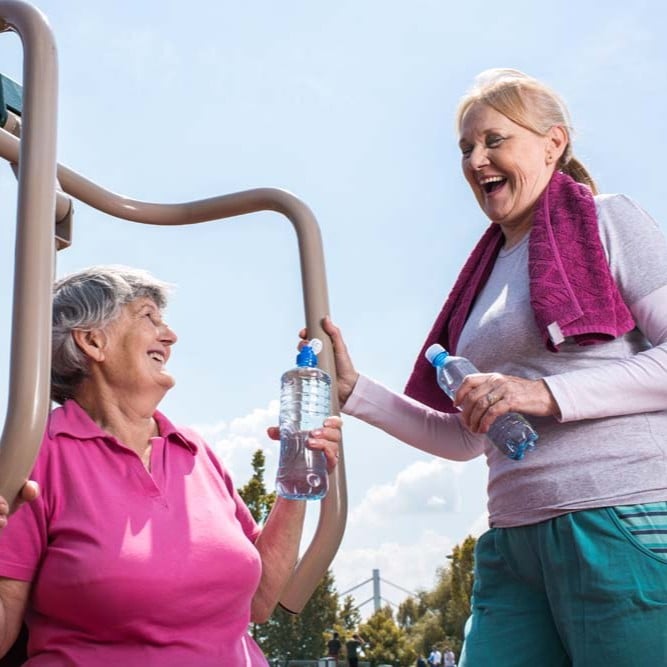
Physical activity amongst older adults supports healthy ageing and independence. This is particularly important given our ageing population as older adults can often face more barriers to being active.
Consider the case for change:
- There is extensive evidence of multiple benefits of physical activity for physical and mental health, independence and wellbeing in older adults across diverse health, function and independence levels.2-4 Structured exercise targeting balance and strength helps to prevent falls among older people.5
- Increasing population level physical activity is particularly important in the context of our ageing population. In 2020, there were 4.2 million people aged 65 years and over in Australia, representing 16% of the population. In the coming decades with the anticipated continued rise in life expectancy the number of people aged over 65 years is predicted to more than double to 10.2 million – up to 23% of the population – by 2066.6
- Life expectancy at age 65 – the average number of additional years that a person at age 65 can be expected to live – is projected to continue to increase. In 2022–23, life expectancy at age 65 was 20 years for men and 23 years for women. This is expected to increase to 25 years for men and 26 years for women by 2062–63.7 Total government spending on aged care as a proportion of gross domestic product (GDP), currently 1.1%, is predicted to increase to 2.5% in the 2060s.8
- Health system disease management strategies often focus on survival but neglect function and independence.9 Current funding systems are primarily designed to fund evidence-based medicines,10 medical services,11 and devices. Funding for non-pharmacological interventions, such as physical activity and exercise is harder to secure, even though these interventions can help maintain physical and mental function and have the potential to improve quality of life and life expectancy for older people.
- Older adults face more barriers to being active than people in other age groups.12 For example, physical activity may be perceived by some older adults as daunting and unsafe,12 with access further constrained by low income, low educational attainment, and lack of neighbourhood accessibility.13-16 Additional social, behavioural and financial support may be required to promote consistent and regular physical activity.17
- There may have been a small increase in physical activity among older people in Australia from 2016 to 2021,18,19 but it is difficult to link this improvement with any specific government and non-government initiatives. Additionally, data show that older adults with disabilities are less active than those without disability.13 Equity issues in participation remain, as many services that support older people to be active require participants to pay, with few funded for those who cannot afford to pay for services themselves.15
What is working well to enable physical activity among older adults?
Programs and initiatives, including some with co‑design approaches, have been implemented to some extent around Australia. Resources and toolkits have been developed internationally to provide guidance on city design and health promotion strategies which support and encourage physical activity in older adults. Recently, there has been a small increase in physical activity amongst older adults. The following documents what is working well.
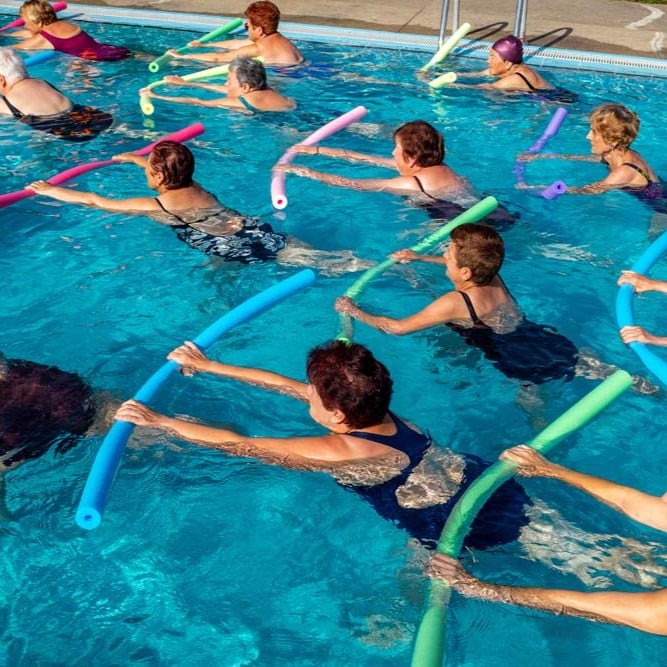
- Some state governments are investing in initiatives to promote physical activity amongst older adults. For example, the NSW Ministry of Health funds the Active and Healthy website,20 which provides an up to date index of physical activity opportunities for people aged 50 and over across NSW that is searchable by postcode. They have supported exercise and falls prevention programs for older adults, and provides some funding to deliver programs such as Stepping On, which teaches a structured exercise program. Injury Matters, funded by the Western Australia Government, produces Stay on Your Feet ®, a toolkit of evidence-based resources for consumers and health and aged-care professionals to promote balance and strength exercises for falls prevention.
- The Exercise intervention outdoor project in the community (ENJOY) Seniors Exercise Park program, developed by the National Ageing Research Institute, involves partnerships with local government to create outdoor spaces for older adults to engage in physical activity.21 Seniors exercise parks consist of outdoor playground equipment specifically designed for older people to improve strength, balance, joint movements and overall mobility and function. More than 20 seniors exercise parks have been established across Victoria, New South Wales and Tasmania.
- Global resources have been developed to provide guidance for age-friendly cities and communities with consideration of socio-economic factors.22-24 The ACTIVE toolkit developed by the World Health Organization provides evidence-based guidance on key approaches to promoting and enabling all older people to be physically active. The Canadian Choose to Move program is an example of a choice-based physical activity support program, with personalised guidance and community connection.25
- Australian mass media campaigns offer examples of effective targeting of physical activity messages for older people in Australia.24,26 They have used a variety of media channels, community newsletters and posters, in collaboration with local organisations, health services, and community groups, to reinforce campaign messages and foster a supportive environment for behaviour change.
- Community-driven strategies such as citizen science and participatory design can be powerful tools to identify local barriers, improve environments, and increase participation. A strong example is the Toowoomba Healthy Towns project, in which older residents collaborated with local stakeholders to advocate for improved neighbourhood walkability and active transport across the lifespan.27,28
Case studies
The following case studies showcase programs, partnerships and community‑led approaches that are working well to support physical activity, healthy ageing, independence and social connection for older adults.
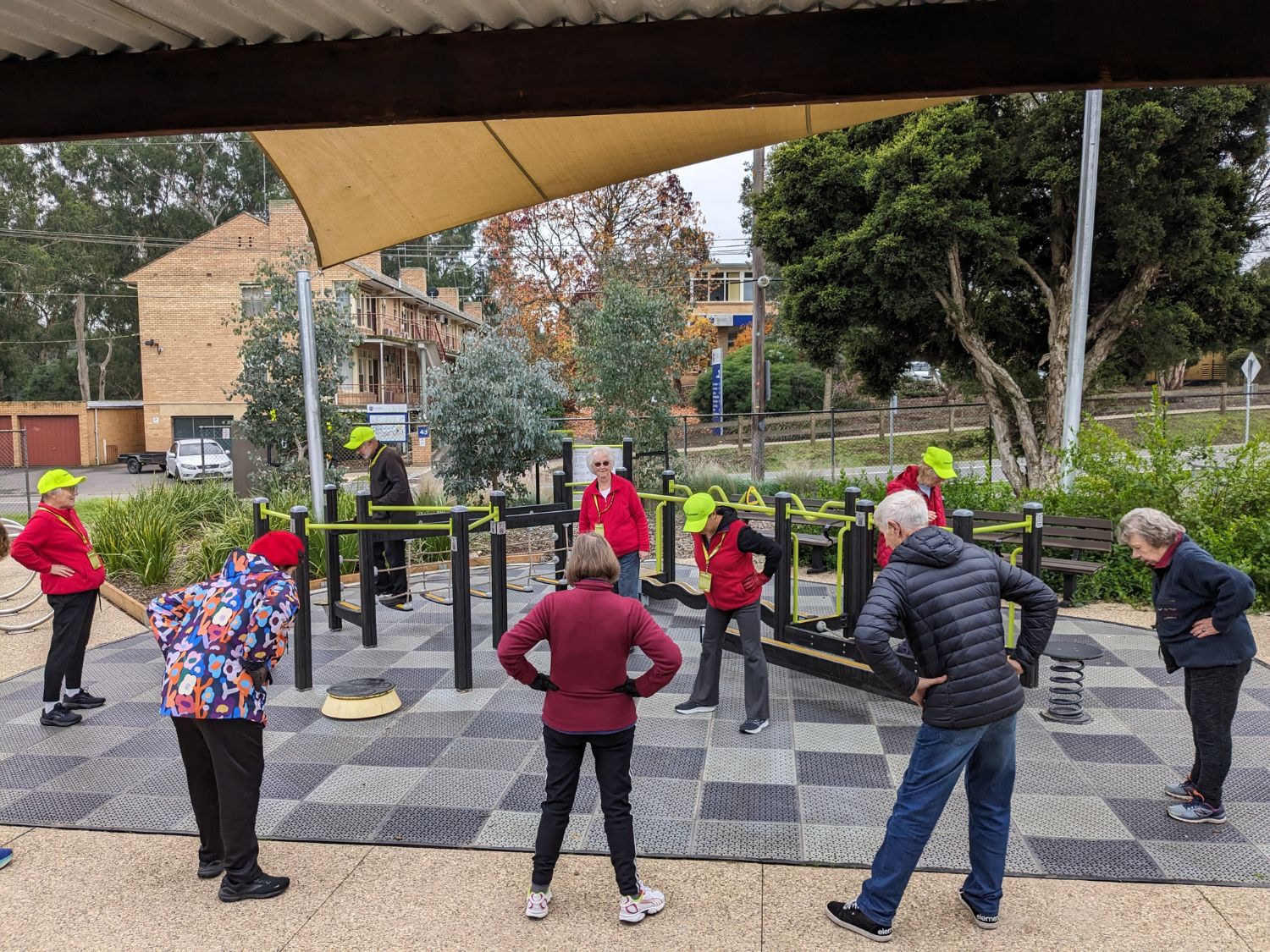
Active ageing via older adult-friendly outdoor spaces (ENJOY)
Purpose-built outdoor exercise parks help older adults stay active and independent, while improving wellbeing, reducing falls risk and connecting communities.
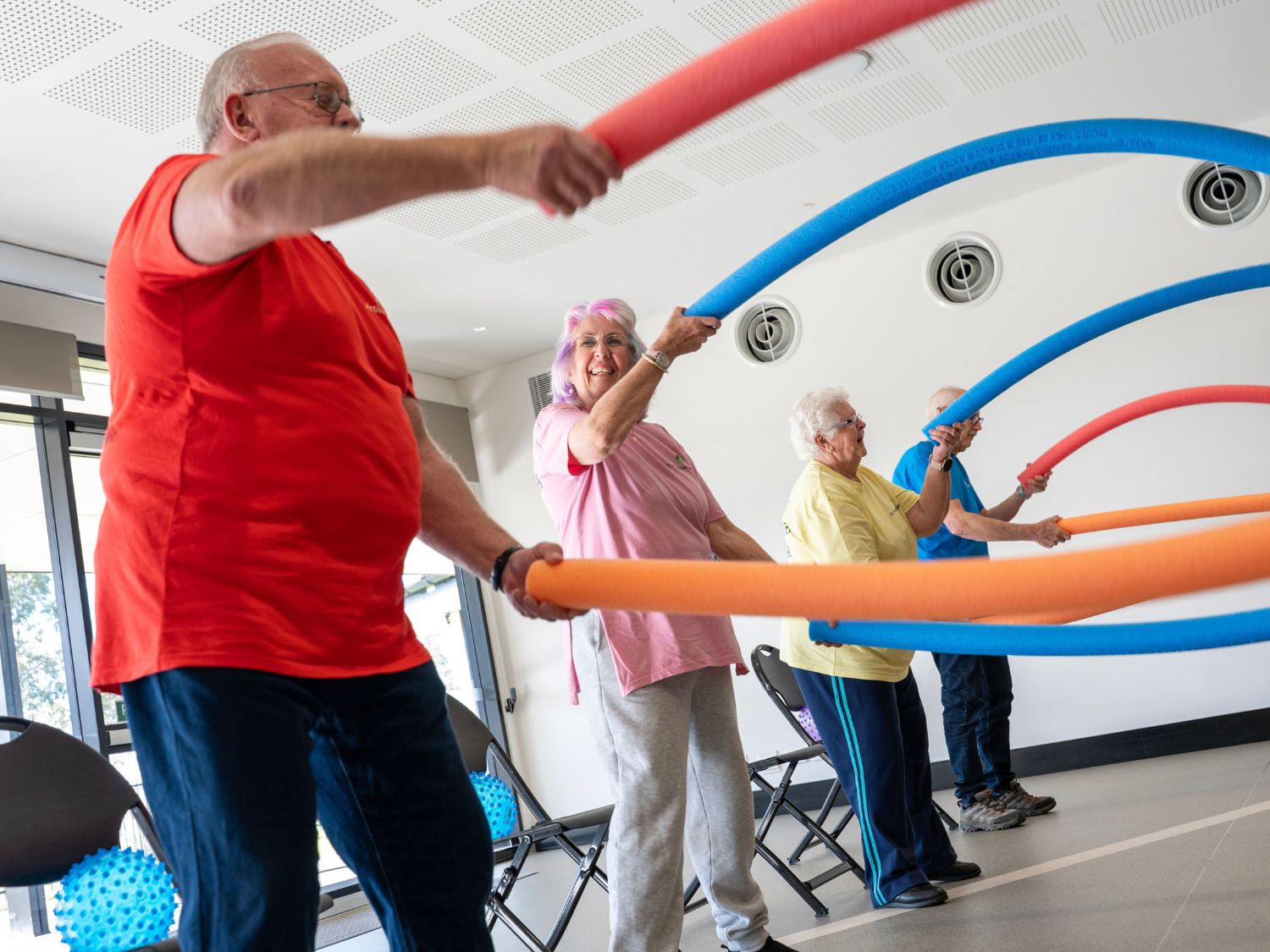
Active, Stronger, Better; an initiative of the Hunter Ageing Alliance
A scalable exercise model aimed at improving older adults’ strength, balance, mobility and social connection, through trained professionals and community delivery.
What must be done to increase physical activity in older adults?
Though Australia has programs and initiatives to support physical activity among older adults, and physical activity levels may have increased in this group, there remains much room for improvement. The following sections outline strategies to further improve physical activity among older adults, including recommendations for policy, better systems integration, urban design, service provision, and program co‑design, while highlighting the need to consider inclusivity.
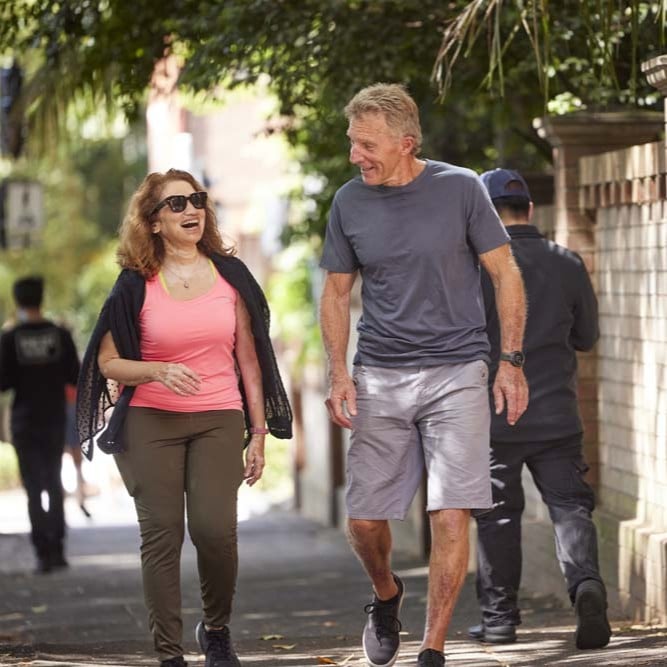
Policy, practice and leadership
- Ensure the National Physical Activity Plan (see Joining up action for an active Australia) embeds older adult physical activity goals in national and state-level public health and aged care strategies.
- Provide leadership that enables system integration through policy guidance, funding mechanisms and design standards for age-friendly environments.22-24
- Use frameworks such as the Global Age-Friendly Cities initiative to guide planning and retrofitting of infrastructure.29
- Expand funding for prevention-focused supports such as physical activity prescriptions, health coaching, supervised programs and telehealth-delivered exercise. This will enhance equitable access and strengthen the role of primary care and other services in promoting active ageing.30 Funding could be provided through Medicare, Primary Health Networks, aged care services, and state and local governments.
Urban design and planning
Design and maintain local infrastructure that supports safe, accessible and engaging physical activity, including well-maintained and connected footpaths, seating, accessible toilets and good lighting.31,32
Incorporate dementia-friendly and cognitive supportive design elements to enhance usability for older adults with cognitive impairment.33-35
Prioritise safety and confidence for older adults by reviewing and adjusting local policies (e.g. shared paths, cycling regulations) to balance active transport with pedestrian safety.12
Organisation and service delivery
- Tailor physical activity approaches for people aged 65 and over (and Aboriginal and Torres Strait Islander people aged 50 and over) to their health status, frailty, cognitive function, level of disability and living situation.2-4,13 The benefits of physical activity extend across diverse levels of health, function and independence,2-4 and older adults with disability are less active than those without.13
- Embed evidence-based physical activity interventions and promotion in routine health and aged care services to support older adults and strengthen prevention-focused care.9,36
- Improve equity by increasing access to funded physical activity programs for those who cannot afford to pay.15
- Develop triaged service models which combine universal promotion with targeted support such as coaching and supervised programs for those with higher needs.4
- Integrate technology-enabled options, including telehealth, virtual exercise classes, active video games (exergaming) and digital tools, particularly for older adults in regional and remote areas and those comfortable using technology.37-40
Workforce
- Fund statewide training and accreditation for health and community-based providers to deliver safe, evidence-based physical activity interventions for all older adults, including diverse groups and those with mobility or cognitive impairments.41-43
- Improve pre- and in-service training to enable health professionals to prescribe and promote physical activity for older adults.44-46
Community awareness and engagement
- Support co-design and delivery of programs by local communities, including Aboriginal and Torres Strait Islander communities, ensuring cultural safety and relevance. Participatory approaches such as the Toowoomba Healthy Towns project show how older residents can identify local barriers and improve their environments.27,28
- Promote inclusive, community-based education and activation campaigns to increase awareness, motivation and confidence for lifelong activity.24,26
Research, data and innovation
- A review of the evidence for this action area identified the following priorities for investment in research, data and innovation.
- Evaluate social and economic outcomes of physical activity interventions for older adults.4
- Support implementation of structured programs and strengthen broader initiatives to promote active societies, active environments and active systems for older people in line with the Global Action Plan for Physical Activity (GAPPA).47
- Explore remote and digital interventions, social prescribing, equity-based incentive schemes, workplace promotion and peer support for physical activity in older adults.
- Investigate how technology could be used to enhance engagement with physical activity interventions, in order to improve health outcomes in older adults.48
- Improve understanding of older adults’ preferences for receiving physical activity information and support.
References
1. United Nations. Sustainable Development Goals. Accessed 6 July 2026. https://sdgs.un.org/goals
2. Bull FC, Al-Ansari SS, Biddle S, et al. World Health Organization 2020 guidelines on physical activity and sedentary behaviour. Br J Sports Med. 2020;54(24):1451–1462. doi:10.1136/bjsports-2020-102955
3. Taylor J, Walsh S, Kwok W, et al. A scoping review of physical activity interventions for older adults. Int J Behav Nutr Phys Act. 2021;18(1):82. doi:10.1186/s12966-021-01140-9
4. Pinheiro MB, Oliveira JS, Baldwin JN, et al. Impact of physical activity programs and services for older adults: a rapid review. Int J Behav Nutr Phys Act. 2022;19(1):87. doi:10.1186/s12966-022-01318-9
5. Sherrington C, Fairhall N, Wallbank G, et al. Exercise for preventing falls in older people living in the community: an abridged Cochrane systematic review. Br J Sports Med. 2020;54(15):885–891. doi:10.1136/bjsports-2019-101512
6. Australian Institute of Health and Welfare. Older Australians. 2024. Accessed 23 October 2025. https://www.aihw.gov.au/reports/older-people/older-australians/contents/demographic-profile
7. Australian Government, Centre for Population. 2024 Population Statement. 2024. Accessed 23 October 2025. https://population.gov.au/publications/statements/2024-population-statement
8. Australian Government. Intergenerational Report 2023: Australia's future to 2063. 2023. https://treasury.gov.au/sites/default/files/2023-08/p2023-435150.pdf [PDF]
9. Beard JR, Officer A, de Carvalho IA, et al. The World report on ageing and health: a policy framework for healthy ageing. The Lancet. 2016;387(10033):2145-2154. doi:10.1016/S0140-6736(15)00516-4
10. Australian Government, Department of Health, Disability and Ageing. Pharmaceutical Benefits Advisory Committee (PBAC) Guidelines. 2016. https://pbac.pbs.gov.au/
11. Australian Government, Department of Health, Disability and Ageing. Medical Services Advisory Committee: Guidelines for preparing submissions. 2021. Accessed 23 October 2025. https://www.msac.gov.au/resources/guidelines-preparing-assessments-msac
12. Franco MR, Tong A, Howard K, et al. Older people’s perspectives on participation in physical activity: a systematic review and thematic synthesis of qualitative literature. Br J Sports Med. 2015;49(19):1268–76. doi:10.1136/bjsports-2014-094015
13. Hassett L, Shields N, Cole J, Owen K, Sherrington C. Comparisons of leisure-time physical activity participation by adults with and without a disability: results of an Australian cross-sectional national survey. BMJ Open Sport Exerc Med. 2021;7(1):e000991. doi:10.1136/bmjsem-2020-000991
14. Rivera-Torres S, Fahey TD, Rivera MA. Adherence to exercise programs in older adults: informative report. Gerontol Geriatr Med. 2019;5:2333721418823604. doi:10.1177/2333721418823604
15. Australian Institute of Health and Welfare. Physical activity. 2024. Accessed 29 March 2025. https://www.aihw.gov.au/reports/physical-activity/physical-activity
16. Cerin E, Conway TL, Adams MA, et al. Objectively-assessed neighbourhood destination accessibility and physical activity in adults from 10 countries: an analysis of moderators and perceptions as mediators. Soc Sci Med 2018;211:282–293. doi:10.1016/j.socscimed.2018.06.034
17. Stathi A, Fox K, Withall J, Bentley G, Thompson J. Promoting physical activity in older adults: a guide for local decision makers. 2014. https://purehost.bath.ac.uk/ws/portalfiles/portal/32338941/AVON_strategies_report_2014_Feb.pdf [PDF]
18. Halim N, Owen KB, Smith BJ, et al. Increasing reported physical activity among Australian adults: progress toward a healthy older age. J Aging Phys Act. 2024;33(4):350–358. doi:10.1123/japa.2023-0426
19. Kwok WS, Khalatbari-Soltani S, Dolja-Gore X, et al. Differences in falls and physical activity in older women from two generations. J Gerontol A Biol Sci Med Sci. 2024;79(4):glae033. doi:10.1093/gerona/glae033
20. NSW Government. Active and healthy. 2025. Accessed 23 October 2025. https://www.activeandhealthy.nsw.gov.au/
21. Levinger P, Panisset M, Dunn J, et al. Exercise interveNtion outdoor proJect in the cOmmunitY for older people – results from the ENJOY Seniors Exercise Park project translation research in the community. BMC Geriatr. 2020;20(1):446. doi:10.1186/s12877-020-01824-0
22. Kolbe-Alexander TL, Pacheco K, Tomaz SA, Karpul D, Lambert EV. The relationship between the built environment and habitual levels of physical activity in South African older adults: a pilot study. BMC Public Health. 2015;15(1):518. doi:10.1186/s12889-015-1853-8
23. World Health Organization. National programmes for age-friendly cities and communities: a guide. 2023. https://www.who.int/teams/social-determinants-of-health/demographic-change-and-healthy-ageing/age-friendly-environments
24. World Health Organization. Global database of age friendly practices. Accessed 23 October 2025. https://extranet.who.int/agefriendlyworld/afp/
25. Gould JS, McKay H, Gray S, Bauman A, Nettlefold L, Hoy C. Choose to Move: implementation of a physical activity intervention at scale across British Columbia, Canada. Innov Aging. 2019;3(suppl 1):s122. doi:10.1093/geroni/igz038.447
26. John-Leader F, Van Beurden E, Barnett L, et al. Multimedia campaign on a shoestring: promoting ‘Stay Active - Stay Independent’ among seniors. Health Promot J Austr. 2008;19(1):22–28. doi:10.1071/he08022
27. Kolbe-Alexander T, Gardiner PA, Banchoff A, Schmidt A, Covey-Hansen M, King AC. Toowoomba Healthy Towns: a citizen science initiative on active transport in regional south east Queensland, Australia. J Phys Act Health. 2024;21(11):1132–1141. doi:10.1123/jpah.2024-0119
28. Tuckett AG, Freeman A, Hetherington S, Gardiner PA, King AC, Burnie Brae Citizen Scientists. Older adults using our voice citizen science to create change in their neighborhood environment. Int J Environ Res Public Health. 2018;15(12):2685. doi:10.3390/ijerph15122685
29. World Health Organization. The WHO Age-friendly Cities Framework. Accessed 23 October 2025. https://extranet.who.int/agefriendlyworld/age-friendly-cities-framework/
30. Ball K, Carver A, Downing K, Jackson M, O’Rourke K. Addressing the social determinants of inequities in physical activity and sedentary behaviours. Health Promot Int. 2015;30(suppl 2):ii8–19. doi:10.1093/heapro/dav022
31. Bould E, McFadyen S, Thomas C. Dementia-friendly sport and physical activity guide: supporting people affected by dementia to lead more active lives in their community. 2019. https://www.alzheimers.org.uk/sites/default/files/2019-02/19003-Sports_Leisure_guide_online.pdf [PDF]
32. Giles-Corti B, Moudon AV, Lowe M, et al. What next? Expanding our view of city planning and global health, and implementing and monitoring evidence-informed policy. Lancet Glob Health. 2022;10(6):e919–e926. doi:10.1016/s2214-109x(22)00066-3
33. Nouri M, Chaudhury H. Built environment factors and their impacts on outdoor walking activity among people living with dementia: a spatial analysis approach. Front Public Health. 2025;13:1576548. doi:10.3389/fpubh.2025.1576548
34. Gan DRY, Chaudhury H, Mann J, Wister AV. Dementia-friendly neighborhood and the built environment: a scoping review. Gerontologist. 2022;62(6):e340-e356. doi:10.1093/geront/gnab019
35. Fleming R, Bennett K, Preece T, Phillipson L. The development and testing of the dementia friendly communities environment assessment tool (DFC EAT). Int Psychogeriatr. 2017;29(2):303-311. doi:10.1017/s1041610216001678
36. Cunningham C, O’Sullivan R. Healthcare professionals’ application and integration of physical activity in routine practice with older adults: a qualitative study. Int J Environ Res Public Health. 2021;18(21):11222. doi:10.3390/ijerph182111222
37. Sturnieks DL, Hicks C, Smith N, et al. Exergame and cognitive training for preventing falls in community-dwelling older people: a randomized controlled trial. Nat Med. 2024;30(1):98–105. doi:10.1038/s41591-023-02739-0
38. Haynes A, Gilchrist H, Oliveira JS, Sherrington C, Tiedemann A. “I wouldn’t have joined if it wasn’t online”: understanding older people’s engagement with teleyoga classes for fall prevention. BMC Complement Med Ther. 2022;22(1):283. doi:10.1186/s12906-022-03756-1
39. Oliveira JS, Sherrington C, Zheng ERY, Franco MR, Tiedemann A. Effect of interventions using physical activity trackers on physical activity in people aged 60 years and over: a systematic review and meta-analysis. Br J Sports Med. 2020;54(20):1188–1194. doi:10.1136/bjsports-2018-100324
40. Dawson R, Oliveira JS, Kwok WS, et al. Exercise interventions delivered through telehealth to improve physical functioning for older adults with frailty, cognitive, or mobility disability: a systematic review and meta-analysis. Telemed J E Health. 2024;30(4):940–950. doi:10.1089/tmj.2023.0177
41. Taylor MJ, Kendrick D, Coupland C, et al. Evaluation of the Falls Management Exercise (FaME) programme implemented across three United Kingdom regions: a prospective cohort study. BMC Public Health. 2026;26(1):1211. doi:10.1186/s12889-026-26893-5
42. Manning F, Ventre JP, Brough G, et al. Mediators implementation and delivery: the falls management exercise programme (FaME). BMC Health Serv Res. 2025;25(1):1396. doi:10.1186/s12913-025-13550-7
43. Harvey K, Griffin M. Exercise instructors for older adult fitness: a review of the literature. Can J Aging. 2020;39(3):373-384. doi:10.1017/s0714980819000436
44. Freene N, Cools S, Hills D, Bissett B, Pumpa K, Cooper G. A wake-up call for physical activity promotion in Australia: results from a survey of Australian nursing and allied health professionals. Aust Health Rev. 2019;43(2):165–170. doi:10.1071/AH16240
45. Freene N, Porra K, Bousie JA, et al. Australian university nursing and allied health students’ and staff physical activity promotion preparedness and knowledge: a pre-post study using an educational intervention. Int J Environ Res Public Health. 2022;19(15):9255. doi:10.3390/ijerph19159255
46. Exercise & Sports Science Australia. Exercise is Medicine Australia. Accessed 15 October 2025. https://exerciseismedicine.org.au/
47. World Health Organization. Global Action Plan on Physical Activity 2018–2030: more active people for a healthier world. 2018. https://www.who.int/publications/i/item/9789241514187
48. Livingston G, Huntley J, Liu KY, et al. Dementia prevention, intervention, and care: 2024 report of the Lancet standing Commission. Lancet. 2024;404(10452):572–628. doi:10.1016/S0140-6736(24)01296-0
Heart Foundation related information for older adults

Children and young people
Aboriginal and Torres Strait Islander peoples