
BeUpstanding™
This is the accordion title
Test title
Test paragraph
.jpg)
Project updates

Global recognition: WHO elevates potassium-enriched salt
For the first time, the World Health Organization (WHO) has included potassium-enriched salt as a recommended strategy to reduce population sodium intake highlighting a major step forward in efforts to prevent high blood pressure and cardiovascular disease.
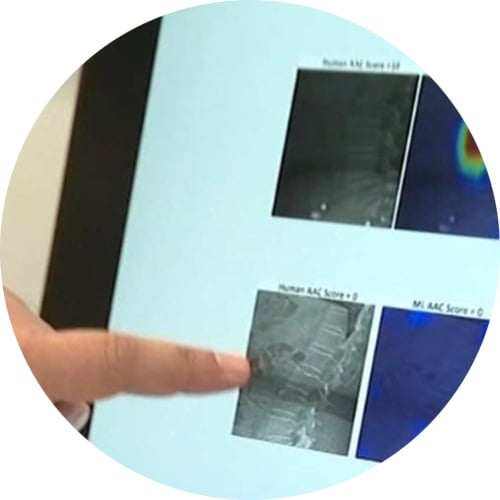
National media coverage highlights this breakthrough in early detection
The major advancement by Professor Joshua Lewis and his global team of researchers has recently received significant national media attention, highlighting the potential of this research to transform how heart disease is detected and prevented.
.png?format=pjpg&auto=webp)
A new centre to help the world switch salt
In late March, The George Institute for Global Health launched the Centre for Research Excellence on Switching the World’s Salt Supply for Cardiovascular Prevention, marking a major step forward in global efforts to prevent heart disease and stroke.

Beyond Blue
Visit the Beyond Blue website for more information about mental health treatment and management, or to find a mental health professional in your area.

WellMob
Access online resources focusing on social, emotional and cultural wellbeing for First Nations peoples on the WellMob website.

Rural mental health services
Rural mental health services are listed in this help sheet from the National Rural Health Alliance.
Cardiac Psychology Clinic
Access the NeuroCentrix Cardiac Psychology Clinic (formerly part of the Australian Centre for Heart Health): call 03 9546 0009 or register online.
Black Dog Institute
Find online tools and mobile apps to support mental health and wellbeing on the Black Dog Institute website.
Emotional wellbeing is like having a garden. Sometimes it grows green on its own, other times it needs watering, cutting back or fertilising to keep things at optimum bloom. Emotional wellbeing is a personal state of being; the way you feel, the way you think, and the way you handle life’s ups and downs are all impacted if your wellbeing is not in balance.
Positive emotional wellbeing is important to have at any age and life stage but is especially important when living with a heart condition due to the strong relationship between heart health and emotional health. This means that when your physical health status changes, the likelihood is, so will your emotional health.
This article aims to promote an understanding of a variety of common emotional wellbeing issues amongst people with heart conditions, and offers some advice on how to improve emotional health and where to get some extra help if you think you need it.
What emotional symptoms can look like
After any new diagnosis, surgery or heart event, most people are faced with some sort of emotional recovery as well. This usually happens long after the physical healing takes place. There could be emotional changes like sadness, fear, dread, guilt, grief, shame or regret, as well as changes to the way we act like withdrawing from others, losing motivation, reduced interest in usual activities, not wanting to be alone, or repeatedly being on the look-out for signs of illness. You may notice your thinking patterns change, like having persistent worries or fearing the worst-case scenario will come true. It’s also common to feel negatively about yourself, such as believing you’re a burden or thinking that you’re faulty in some way.
Confusingly, certain emotional symptoms look exactly like cardiac symptoms, such as fatigue, increased heart rate, palpitations, a dry mouth and shortness of breath. This is also why emotional symptoms can go undetected and unaddressed for too long as we treat the urgent cardiac symptoms first.
If you experience any of the above, know that this is all common and in a lot of ways expected!
When you notice the first signs of dry soil, weeds, struggling plants, reach out early. By watering and tending to what needs care and removing what no longer serves you, you are creating the conditions for healthier, stronger growth over time. It’s important to discuss all of your symptoms (including emotional symptoms) with your medical team.
Dealing with scars, bruises, devices and new parts
Body image issues are common in people with any health condition. But where’s the manual for coming to terms with chest scars, a new heart device or even a donor heart?
We are wired to expect our bodies to do the right thing by us, but after all, we’re not perfect and sometimes neither are our organs. Modern medical interventions work miracles but can also leave us with visible reminders of our most vulnerable and painful moments.
It’s not nice to feel different. Coping with this is very individual; some people hide it, others get tattoos, some like to think about their scars as battle wounds, a badge that says “I made it, I’m alive”. It may take time to accept.
When it comes to others’ questions, say only what you’re comfortable with - your body is your business. And if you want to create an elaborate I-fought-off-a-shark story to get through the initial discomfort, that’s perfectly fine too.
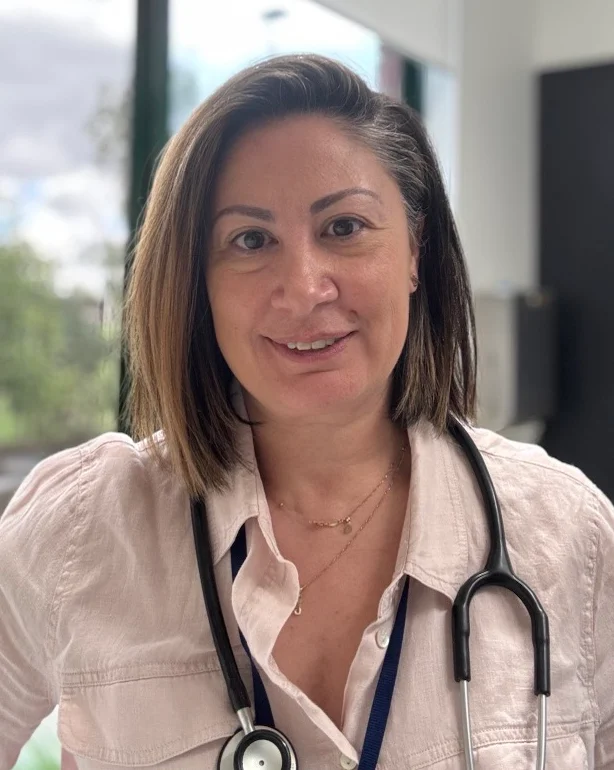
Mr David Anderson
David Anderson has spent more than 30 years in the broadcast television and media industry. Read more.

Mr Mario D’Orazio (Chair)
Mario D’Orazio has more than 40 years’ experience in media as a journalist, including print as a reporter and columnist, radio as a producer and talkback presenter, and TV as a reporter, presenter and executive producer of news, current affairs programs and lifestyle programs. Read more.


1. Assessment and diagnosis
Assessment of people with suspected ACS
Acute chest pain is a relatively common emergency department (ED) presentation, yet only a minority of people will be diagnosed with ACS . Among those presenting with acute chest pain to the ED in whom ACS is suspected, <5% will have STEMI, 5–10% NSTEMI, 5–10% UA, 15–20% other cardiac conditions, and 50–60% non-cardiac conditions . Most people will therefore require further follow-up to assess and diagnose their condition .
Assessment for ACS includes:
- history and physical examination
- ECG
- troponin testing.
These are required to diagnose as well as inform risk assessment and help guide the location and timing of further investigations, management and follow-up. Rapid identification and diagnosis of ACS is crucial as treatments are often time sensitive and earlier intervention improves outcomes.
Assessing a person’s relative risk for ACS is the key initial goal, rather than achieving a conclusive diagnosis of ACS, which may not always be possible at the time (Section Risk assessment and clinical decision pathways for suspected ACS).
Assessment in suspected ACS should:
- identify people with acute coronary occlusion myocardial infarction (ACOMI) (STEMI and STEMI equivalents)
- identify people with NSTEMI
- identify people with UA at high risk for 30-day MACE
- identify people with underlying CAD in whom ACS is not confirmed.
Assessment for people with suspected ACS within an ED setting is described below. Specific guidance for people presenting in regional/remote and primary care settings is given in Section Primary care and regional and remote presentations.
Registration
How do I register?
On the sign-in page, click the “Register” button.
If you are registering as a Research applicant, select the second registration option (NHMRC Administering institution researcher).
Enter your email address as your username and complete all required fields. Once you have completed the registration form, you will receive an email with instructions on setting your password.
If you are registering as a grants administrator, select the third option (Research grants administrator or finance officer). Once you have completed registration, Heart Foundation staff will review your request and activate your account.
How do I reset my password?
If you have forgotten your password, select “Forgot Password?” when signing in and follow the steps provided. If you still have issues signing in, please contact us via email at grantsportal@heartfoundation.org.au or call (03) 9321 1581.
How do I update my profile?
Updating your profile with any Career Disruptions or Relative to Opportunities will help save time when submitting applications. Profiles can be updated at any time throughout the year. Simply login to the portal, click the “My Profile” tile, then navigate to the section of the profile you wish to update (Personal information; Career Disruptions; or Heart Foundation Engagement).
To update your Achievements (publications, presentations, funding etc) please see the ORCID section of the FAQ.
Can I log in with my old portal details?
The new portal is not connected to the old portal.
While we have migrated user accounts for some researchers, Research Administration Office and Finance Officers, your password will need to change. Migrated users will be sent instructions on how to access their account.
Not receiving emails?
Please check your spam/junk folder or quarantined emails in case you are expecting an email (such as a reset password link) and have not received it in your inbox. If you are still not receiving emails, please contact us via email at grantsportal@heartfoundation.org.au or call (03) 9321 1581.
Can I register with multiple affiliated Institutions?
At this stage of the new Portal’s development, you are only able to register an account with a single affiliated institution, which will be populated into your applications.
If you need to change your affiliation, please contact the Heart Foundation via email at grantsportal@heartfoundation.org.au.

Ready to explore opportunities?
Volunteer opportunities
To learn more about our volunteer opportunities, please click here.
Ready to explore opportunities?
Thank you to our institutional partners:

Health professional resources for First Nations heart health
-(1).jpg?width=550&height=auto&format=pjpg&auto=webp)
For professionals: Aboriginal and Torres Strait Islander peoples information and resources
Heart care resources for Aboriginal and Torres Strait Islander peoples.

Guidelines for acute rheumatic fever and rheumatic heart disease
Australian guidelines for rheumatic fever and rheumatic heart disease.
.jpg?width=550&height=auto&format=pjpg&auto=webp)
For professionals: Women and heart disease
Resources addressing knowledge gaps about heart disease in women.

For professionals: CVD risk assessment for Aboriginal and Torres Strait Islander peoples
CVD risk assessment recommendations for Aboriginal and Torres Strait Islander peoples

Online courses for health professionals
Heart Foundation online courses for health professionals in cardiovascular care.
CVD Tool (heartyarningtool.com)
A yarn‑based guide for discussing heart health and risk reduction.
Heart Health resources for First Nations peoples
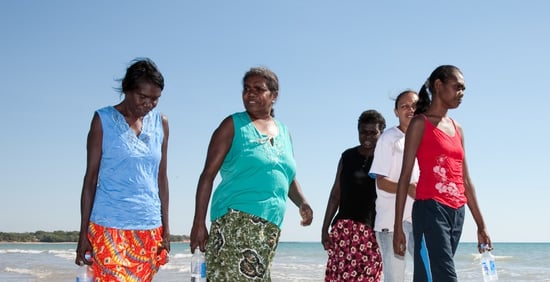
What is heart disease?
Heart disease can affect Aboriginal and Torres Strait Islander peoples earlier.

Aboriginal heart health website
Visit the St Vincent’s Hospital NSW and Heart Foundation Aboriginal heart health website.

Signs to check your heart health
Preventing heart disease starts with knowing what helps and harms your heart.

How to keep your heart strong
Support and resources to help you stay healthy and reduce risk of heart disease.
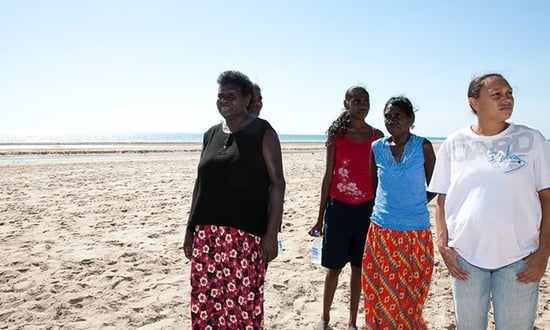
Pilbara Aboriginal Heart Health Program
The Pilbara Aboriginal Heart Health Program supports local heart health.

What is acute rheumatic fever (ARF) and rheumatic heart disease (RHD)?
Rheumatic heart disease causes serious damage to heart valves.