
Blueprint for an Active Australia
Be the first to know
Join our mailing list for exclusive access to the Blueprint for an Active Australia 4th Edition paper and updates related to evidence on improving physical activity in Australia.
Blueprint for an Active Australia – 4th edition
Evidence informed actions to create a more active Australia.
Physical inactivity is one of Australia’s most pressing public health challenges, contributing to chronic disease, increasing healthcare costs and reducing quality of life1-7. Creating a more active Australia requires coordinated action across the systems, settings and sectors that shape how people live, work, learn, play and travel.
The 4th edition of the Blueprint for an Active Australia brings together the latest evidence and translates it into practical, actionable recommendations. Developed in 2026 by the Heart Foundation in collaboration with leading and emerging experts in physical activity, it provides an evidence-based foundation for policy development, investment, strategic planning, and program implementation.
What can be found in the Blueprint?
The Blueprint features 12 action areas designed to support governments, industry members, researchers, practitioners, and decision-makers.
These include:
- Children and young people
- Older adults
- Aboriginal and Torres Strait Islander peoples
- Priority populations
- Built environments
- Active travel
- Sport and active recreation
- Education and childcare
- Healthcare
- Workplaces
- Financial incentives
- Mass reach strategies
Each area includes:
- Key messages and strategic priorities,
- Evidence explaining why action is needed, as well as recommendations and opportunities for change
- Examples of what is working well, including Australian case studies.
Explore the Blueprint for an Active Australia to find the latest evidence, identify priorities relevant to your work, and discover opportunities for cross-sector collaboration. Together, these actions can help ensure more people across Australia have the opportunity to be physically active.
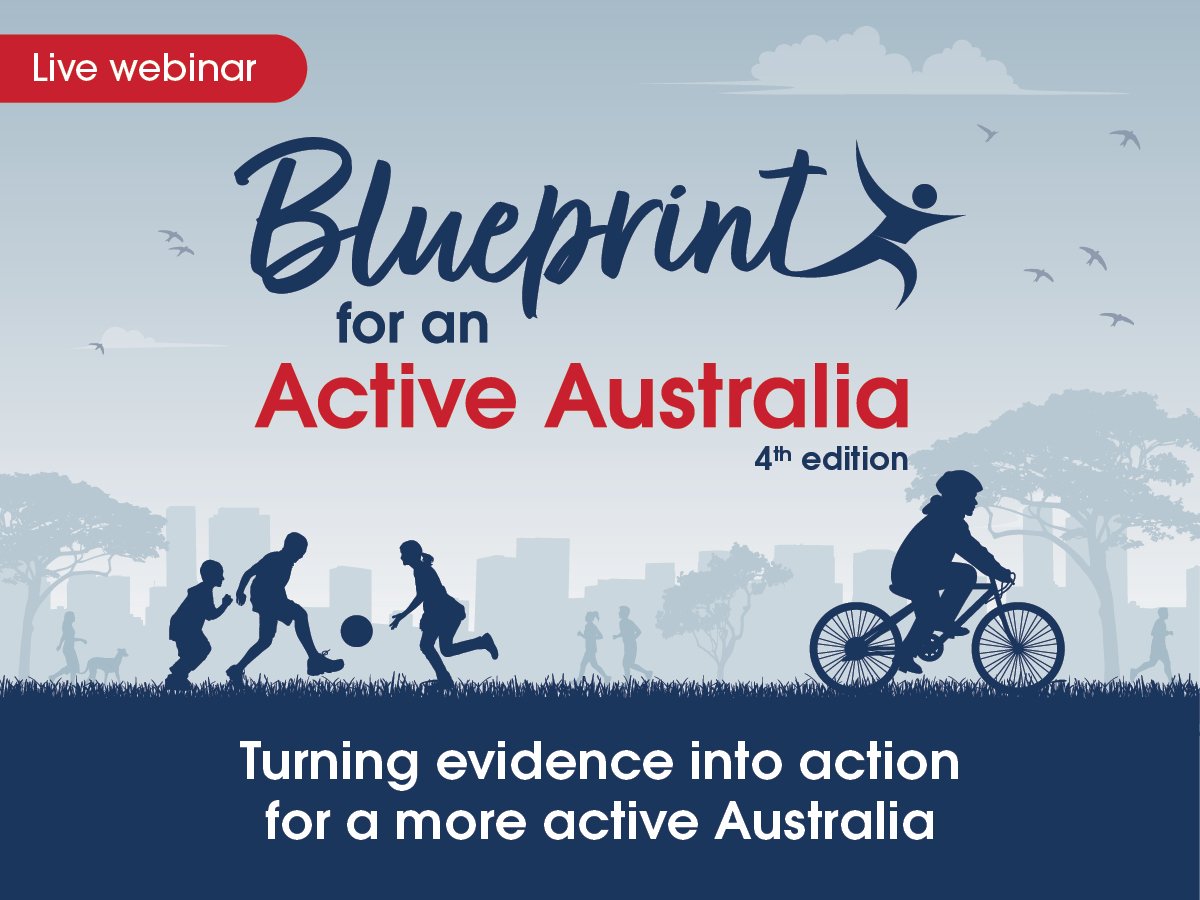
Thursday 12 November at 12pm
Save the date for our upcoming webinar to explore the 4th edition. We’ll introduce the latest updates, highlight key messages and discuss how the Blueprint can support action across policy, planning, programs and partnerships to help create more active communities across Australia.
Stay connected
We will continue to provide new and exciting updates and resources on this page. We encourage you to visit regularly to stay informed and engaged with our latest work.
Stay in touch by joining our mailing list to receive updates. If you have any questions or are interested in collaborating to create a more active Australia, contact our team at activeliving@heartfoundation.org.au
You might also be interested in...

Healthy Active by Design
Improving the design of our cities, towns, streets and buildings makes it easier for Australians to lead heart-healthy lives.

Heart Foundation Walking
The Heart Foundation Walking program is Australia’s largest free walking network and offers people across Australia multiple ways to walk with us including walking groups, personal walking plans and more.

Benefits of physical activity for your heart
Physical activity and exercise can do wonders for your physical and mental health.
References
- Anderson E, Durstine JL. Physical activity, exercise, and chronic diseases: a brief review. Sports Med Health Sci. 2019;1(1):3–10. doi:10.1016/j.smhs.2019.08.006
- Mandili IM, Balobaid AN, Alzahrani HH, et al. Types of chronic diseases associated with sedentary behaviour and physical inactivity. Int J Community Med Public Health. 2022;9(10):3965–3970. doi:10.18203/2394-6040.ijcmph20222388
- Iso-Markku P, Kujala UM, Knittle K, Polet J, Vuoksimaa E, Waller K. Physical activity as a protective factor for dementia and Alzheimer's disease: systematic review, meta-analysis and quality assessment of cohort and case-control studies. Br J Sports Med. 2022;56(12):701–709. doi:10.1136/bjsports-2021-104981
- World Health Organization. Global Action Plan on Physical Activity 2018–2030: more active people for a healthier world. 2018. https://www.who.int/publications/i/item/9789241514187
- Australian Institute of Health and Welfare. Health system spending on disease and injury in Australia 2023–24. 2025. Accessed 21 July 2026. https://www.aihw.gov.au/reports/health-welfare-expenditure/health-system-spending-disease-injury-aus-2023-24/contents/summary
- Ding D, Lawson KD, Kolbe-Alexander TL, et al. The economic burden of physical inactivity: a global analysis of major non-communicable diseases. Lancet. 2016;388(10051):1311–1324. doi:10.1016/S0140-6736(16)30383-X
- Roychowdhury D. Using physical activity to enhance health outcomes across the life span. J Funct Morphol Kinesiol. 2020;5(1):2. doi:10.3390/jfmk5010002
Last updated27 October 2026
Last reviewed21 October 2026