
Alcohol and heart health
Heart Foundation’s position & recommendations
- To reduce your risk of alcohol-related disease or injury, the less you drink, the lower your risk of harm. Healthy adults should drink no more than 10 standard drinks a week and no more than 4 standard drinks on any one day. Following the Australian guidelines keeps the risk of harm from alcohol low, but it does not remove all risk.
- Recent, high-quality research has strengthened the evidence that any amount of alcohol increases the risk of heart disease. This challenges previous studies which suggested a small protective effect of low to moderate alcohol intake. The less you drink, the lower your risk of heart disease. For some people, not drinking at all is the safest option.
- To reduce the risk of harm, children and people under 18 years of age, pregnant & breastfeeding women and women trying to conceive should not drink alcohol.
What does the evidence say about drinking alcohol?
Is there a protective effect?
Alcohol research is complex. In the past, some studies suggested that drinking small amounts of alcohol might be good for your heart, while heavy drinking was clearly harmful. But newer, better-quality research shows that the supposed benefits of light drinking may not be due to alcohol itself. Instead, they might be because light drinkers often have healthier lifestyles overall. Recent studies now suggest that alcohol offers little to no real protection for your heart.
How does alcohol impact heart health?
Research shows that alcohol is linked to higher blood pressure and an increased risk of conditions like atrial fibrillation, stroke and heart failure. High-quality studies, including those looking at just one standard drink, have found that even low levels of alcohol can raise the risk of heart disease. Moderate drinking can also raise blood pressure, especially in people who already have high blood pressure, and may make existing heart problems like atrial fibrillation worse.
Heavy and binge drinking further increases risk heart disease, with studies showing larger increases in blood pressure, risk of all stroke types and risk of atrial fibrillation, with the effect increasing as alcohol consumption increases. Long-term and excessive use of alcohol has also been recognised as a non-genetic cause of cardiomyopathy and heart failure, and alcohol can be a potential trigger for individuals with underlying genetic causes of cardiomyopathy.
Impact of alcohol on the heart and blood vessels
Alcohol can affect cardiovascular health in several ways, including:
- Raising blood pressure, leading to a greater risk of heart attack and stroke.
- Increasing risk of all stroke types
- Disrupting heart rhythm, increasing the likelihood of atrial fibrillation.
- Contributing to cardiomyopathy (a disease affecting the heart making it harder to pump blood effectively) and weakening of the heart muscle with heavy or binge use.
- Causing inflammation and oxidative stress (too many ‘bad’ oxidants and not enough ‘good’ antioxidants), damaging blood vessels.
- Affecting cholesterol levels, increasing "bad" LDL cholesterol while having limited benefits for "good" HDL cholesterol.
Pharmacological impacts of alcohol
Alcohol can further impact the cardiovascular system through changing the way drugs interact in the body. Alcohol has a wide array of complex interactions with multiple systems in the body. Alcohol can affect how your body absorbs and processes cardiovascular and other drugs, which may make them less effective or increase side effects. Alcohol can also change how drugs work in your system, and people who drink heavily or binge may be less likely to take their medications as prescribed.
Understanding standard drinks
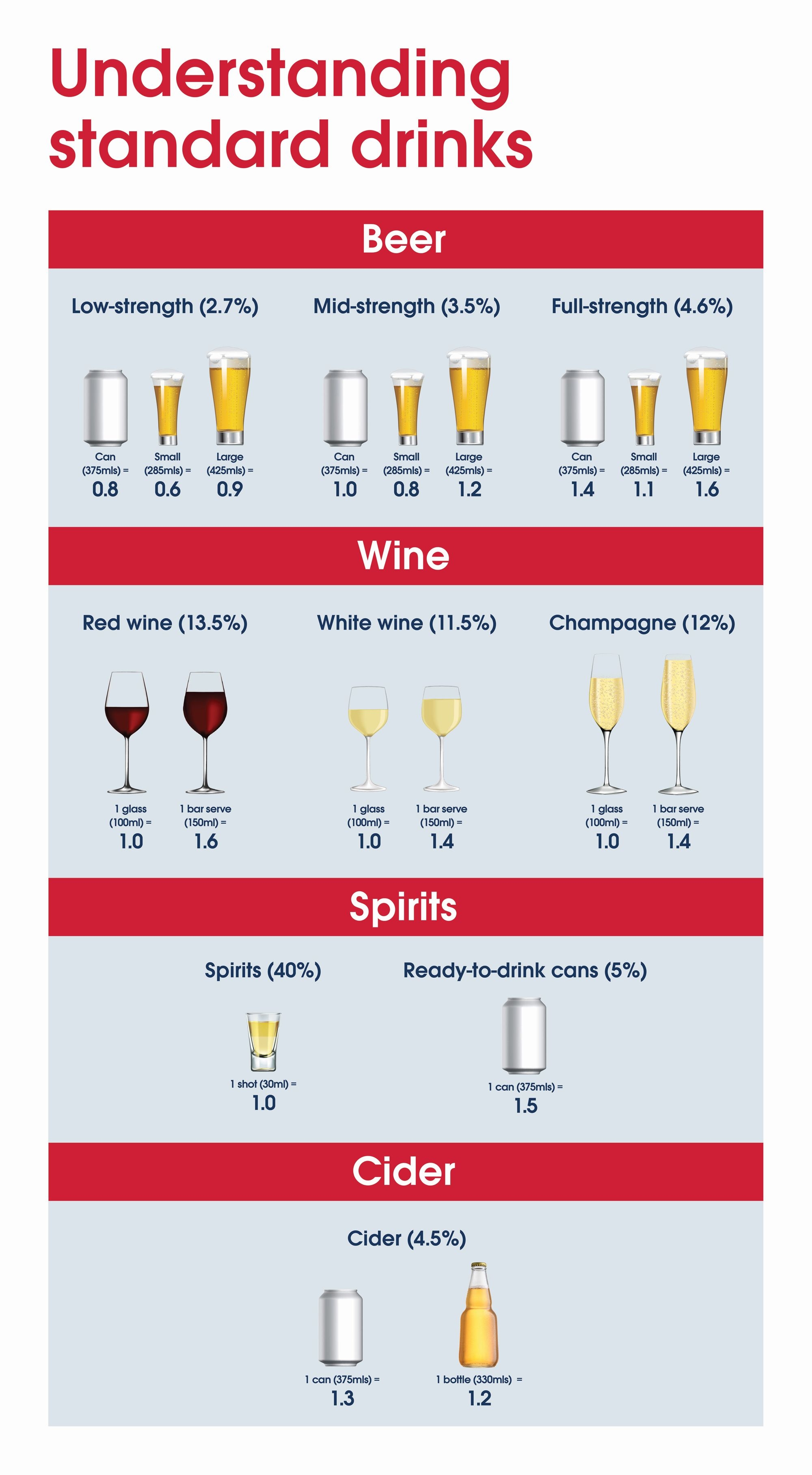
Many alcoholic drinks contain more than one standard drink. Serving size, alcohol strength and type of beverage all effect how much alcohol you’re consuming. In Australia, one standard drink contains 10g of pure alcohol. Always check the label. Alcohol by volume is expressed as a percentage. The higher the percentage, the higher the strength. Use this infographic to estimate the number of standard drinks in different beverages and make informed choices.
Tips to drink less
Set drink limits and track your intake.
Setting a personal limit before you start drinking can help you stay in control. Aim to stay well below the Australian guidelines of no more than 10 standard drinks per week and no more than 4 on any single day. If you’re unsure how many drinks you usually consume, it may be helpful to use a notepad or app to keep track of what and how much you’re drinking.
Include alcohol-free days.
Having regular alcohol-free days each week helps reduce your overall intake. You might start with two or three alcohol-free days and build from there. Use these days to do things that promote heart health, like going for a walk or cooking a heart-healthy meal.
Choose lower-alcohol or non-alcoholic alternatives.
For adults who drink, to reduce alcohol related harm and risk of heart disease, low and zero alcoholic beverages may be a suitable alternative to full strength alcoholic beverages when substituted on standard drinking occasions. Look for products labelled 0.5% ABV (Alcohol by volume) or less.
Avoid binge drinking (more than four drinks on one occasion) and social pressures.
Binge drinking, even occasionally, is harmful to your overall health. If you’re finding it hard to cut back or feel that alcohol is affecting your health or wellbeing, you’re not alone. Free, confidential support is available:
- Alcohol and Drug Foundation: adf.org.au or call 1300 85 85 84
- National Alcohol and Other Drug Hotline: 1800 250 015
- Your GP or health professional can also help guide you to the right services.
Making small changes or talking to someone can be an important first step toward improving your heart and overall health.
Frequently asked questions
Is red wine good for my heart?
The Mediterranean diet is one of the only dietary patterns that has been extensively studied and consistently includes alcohol, traditionally in the form of red wine. However, it is important to note that the evidence is for the total dietary pattern, so the effects of alcohol cannot be separated from the health benefits of the overall diet. Alcohol is not a defining feature of healthy eating patterns nor of heart-healthy eating, despite its inclusion in the Mediterranean diet. This well-researched eating pattern has strong evidence and underpins the Heart Foundation’s Heart-Healthy Eating Pattern.
What if I already drink? Should I stop?
If you currently drink alcohol, the safest option for your heart is to reduce how much you drink. Even small amounts of alcohol can increase your risk of heart conditions such as high blood pressure and atrial fibrillation. If you're unsure or have concerns, talk to your GP or a health professional for support.
Is there a safe level of alcohol for people with heart disease?
There is no confirmed safe level of alcohol for people with heart disease. The risk from alcohol appears to increase even at low levels, particularly for people with conditions like atrial fibrillation or high blood pressure.
The Heart Foundation supports NHMRC guidelines as an upper limit, not a target, and recommends that people with or at risk of heart disease may benefit from drinking less or not at all.
Helping you to reduce alcohol intake
To help reduce alcohol consumption the Heart Foundation advocates on behalf of people living in Australia for stronger alcohol policies and interventions. These include:
- Increased volumetric taxation on all alcoholic beverages
- Improved labelling on alcoholic beverages
- Nationally consistent legislation regulating alcohol delivery
- Restrictions on alcohol advertising exposure to all Australians including, but not limited to, persons aged less than 18 years who are not of legal drinking age.
Further reading and resources
- NHMRC Guidelines
- Heart Foundation’s Alcohol Position Statement and Evidence Summary
- Australian Alcohol & Drug Foundation
You might also be interested in...

Alcohol and heart health: your top questions answered
There’s now strong evidence that drinking alcohol doesn’t have any heart health benefits and isn’t recommended as part of a heart-healthy eating pattern.

The best (and worst) drinks for heart health
Water is the most heart-healthy drink, but there are other drinks that you can enjoy in moderation.

Food standards and nutrition for heart health
Explore the Heart Foundation’s submissions on food standards and nutrition for heart health.
Last updated04 January 2026