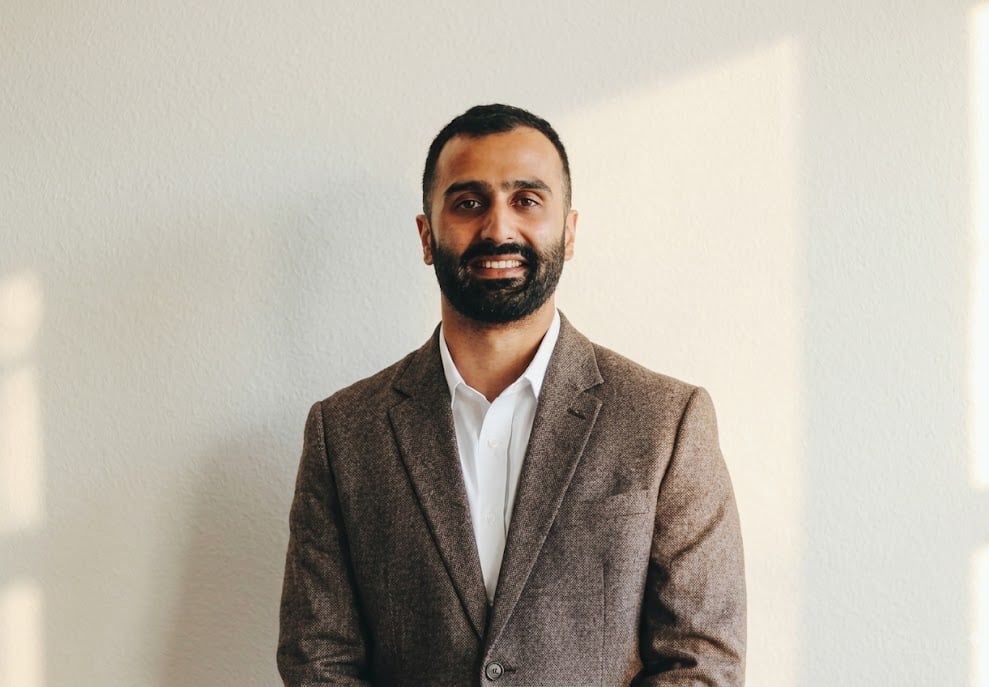
Researcher Q&A with Dr Sarang Paleri
How artificial intelligence could help prevent heart attacks before they happen
Dr Sarang Paleri is a cardiologist and PhD candidate at Monash University and the Victorian Heart Hospital. He specialises in heart imaging, using scans such as CT and ultrasound to detect and manage heart disease. Supported by a 2025 Heart Foundation Postgraduate Scholarship, Sarang is investigating how artificial intelligence (AI) can help doctors identify dangerous heart disease earlier and personalise treatment for people at risk of a heart attack.
What are you currently researching?
Coronary artery disease is caused by a build-up of fatty plaques inside the arteries that supply blood to the heart. It is the leading cause of heart attacks, yet many people have no warning signs until a serious event occurs.
My research project, called IMPACT-AI, is testing whether artificial intelligence can help doctors detect and manage coronary artery disease more effectively. We use a specialised AI tool to measure plaque build-up in heart CT scans – in much greater detail than can be seen by the human eye alone.
At the Victorian Heart Hospital, we are running a clinical trial comparing AI-guided care with standard care. This will help us work out whether AI can help doctors identify dangerous plaque earlier, personalise treatment and reduce the need for invasive procedures such as angiograms.
What difference will your research make to people’s cardiovascular health in Australia?
Coronary artery disease is one of the leading causes of death in Australia. One of the challenges is that many people at risk of a heart attack are missed because traditional tests often focus on blockages rather than the disease developing within the artery wall.
If successful, this research could change the way heart disease is detected and treated. By using AI to identify dangerous plaques earlier, doctors may be able to intervene before a heart attack occurs.
In the future, this approach could help personalise treatment, reduce unnecessary invasive procedures and ultimately improve outcomes for people living with heart disease across Australia.
What motivated you to do your research?
As a cardiologist, I care for people every day who have experienced heart attacks that seemed to come without warning. Many of these people had no major blockages detected on previous tests, yet heart disease was quietly developing in their arteries.
I wanted to find a better way to detect this disease earlier and treat it before it causes harm. When I saw how artificial intelligence could analyse a routine CT scan and accurately measure plaque build-up in the arteries, I realised it had the potential to transform how we care for people with heart disease.
What motivates me most is the opportunity to use new technology to prevent heart attacks before they happen and improve the lives of people and their families.
Are there any achievements or discoveries from the past year you can share with us?
Over the past year, our team received ethics approval and began launching the IMPACT-AI clinical trial at the Victorian Heart Hospital. This is an important milestone that allows us to begin enrolling participants and testing AI-assisted analysis of heart scans in a real-world clinical setting.
The study will be conducted through the Victorian Heart Institute Atherosclerosis Imaging Core Laboratory, where we use AI to analyse heart scans with a level of detail that has not previously been possible in routine clinical care.
These are exciting first steps towards bringing AI-guided heart care from the research environment into everyday clinical practice.
What role has Heart Foundation funding had in your career journey?
Heart Foundation funding has made a tremendous difference to both my research and career development. As a clinician-researcher, balancing research with caring for people living with coronary artery disease can be challenging, and this scholarship provides the support needed to dedicate time to running the IMPACT-AI clinical trial.
Without this funding, it would be much more difficult to undertake a PhD while continuing clinical work. The scholarship provides the resources, confidence and opportunity to test whether AI can improve the way we prevent and manage heart disease.
It is also helping me build the skills needed to become an independent researcher who can continue improving heart health outcomes for people in the future.
Do you have a message for Heart Foundation supporters?
Thank you for your generous support of heart research. Your donations are helping us test a new way to detect and treat heart disease using artificial intelligence.
Heart disease remains one of the leading causes of death in Australia, and your support is making it possible to run a clinical trial that could help doctors identify people at risk of a heart attack before it happens.
This research would not be possible without you. I am deeply grateful for the opportunity to carry out work that has the potential to make a real difference for people living with heart disease.
You might also be interested in...
Researcher Q&A with Dr Sarang Paleri
Q&A with Dr Sarang Paleri on using AI to detect heart disease earlier and help prevent future heart attacks.

Applying artificial intelligence to CT scans for personalised coronary heart disease care
Doctor Sarang Paleri, Monash University- Research directory | Heart Foundation
AI detects heart disease using DEXA bone scans
Latest research breakthrough from an Australian researcher shows AI detecting heart disease in DEXA scans. Read more about this exciting innovation.
Last updated20 August 2026