Logan healthy living
Logan Healthy Living is a community-based allied health program designed for people living with or at risk of type 2 diabetes. By offering accessible support focused on physical activity, nutrition, and behaviour change, it addresses a key at-risk population and reflects growing investment in preventive, lifestyle-focused care for chronic disease. The program utilises a data registry that prompts clinicians to assess and monitor physical activity change over time as part of their routine practice.
Background and rationale
Logan Healthy Living by UQ Health Care is an interprofessional allied health service focused on supporting people with and at risk of type 2 diabetes in Logan.1,2 Logan, a region in south east Queensland, Australia, has high levels of health inequity and rates of type 2 diabetes that are almost double the Queensland average.3 Logan Healthy Living is supported by the Queensland Government through Health and Wellbeing Queensland and a broader multisectoral alliance including primary health care; tertiary hospital and health services; and government, community, and university sectors. It is offered at no-cost to consumers and is focused on improving participants health, eating, physical activity and social-connectedness.1,2,4
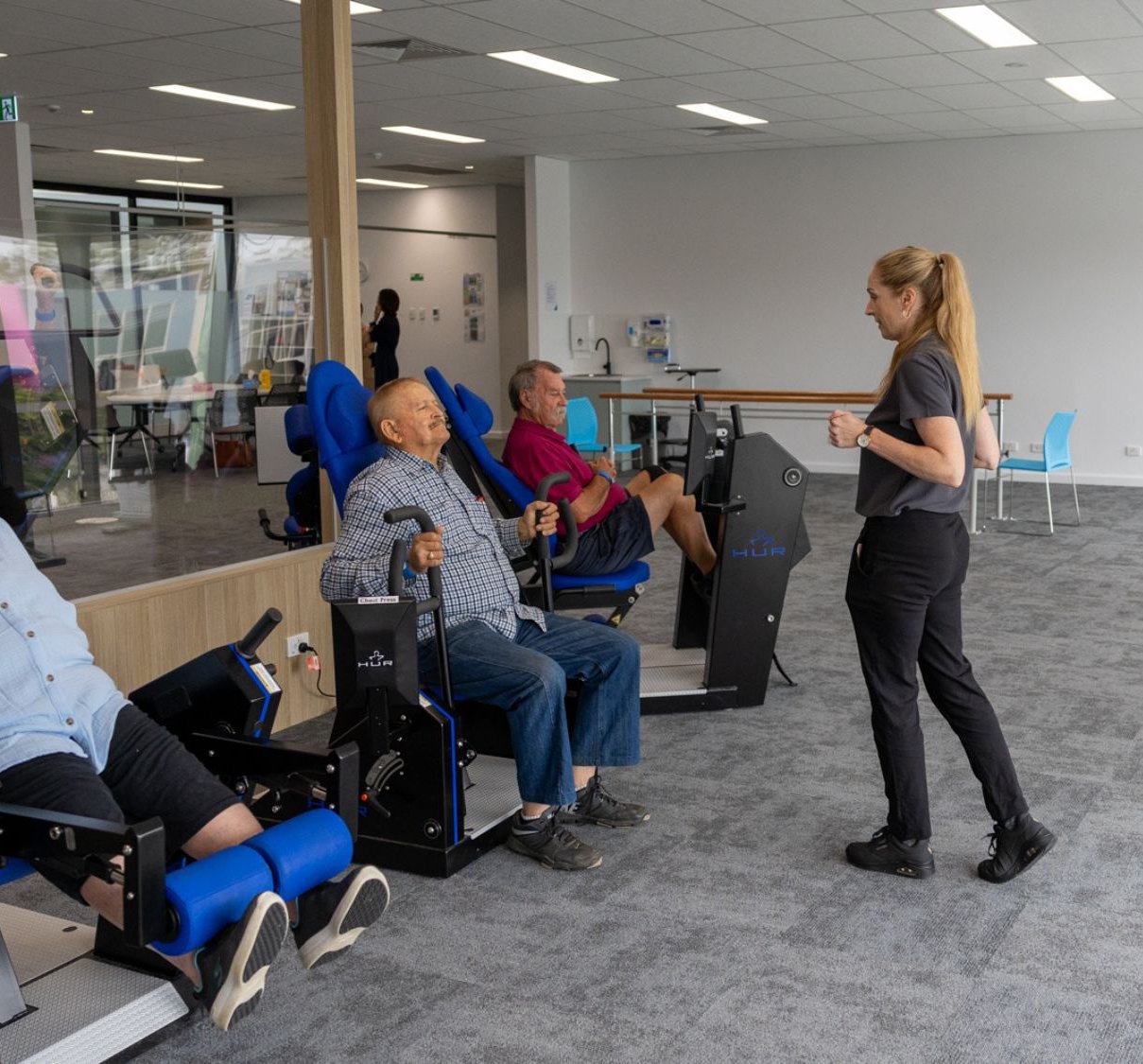
Logan Healthy Living’s primary service is a group-based program focused on improving self-management, self-efficacy, nutrition and physical activity delivered by an interprofessional healthcare team, supported by student health professionals.4 On intake, consumers complete self-report surveys that include physical activity and sedentary behaviour, as well as current involvement in community programs to support their health and wellbeing.4 Clinicians are provided with a report of these data to support history taking and goal setting at intake appointments. The program is comprised of one hour of education and one hour of supervised, individually prescribed exercise per week, with education sessions dedicated to ‘movement as medicine’ and ‘healthy habits’ (planning for maintenance), respectively. Participants are then asked to report their physical activity and connection with community programs at the end of the 8-week group program, with ‘re-charge’ sessions conducted in-person or via telehealth at 1-, 3-, 6-, 9- and 12-month follow up.4
Outcomes and impact
Logan Healthy Living was initially established as a proof-of-concept for a multi-sectoral, community-delivered allied health service, carried out in a region of high unmet need (2021–2024). Embedded in the proof-of-concept was a comprehensive evaluation to measure the program’s impact and return on investment. In the four-year proof-of-concept phase, Logan Healthy Living delivered over 10,000 occasions of service, supported over 30,000 clinical placement hours and more than30 research students.5 The proportion of participants meeting physical activity guidelines increased with the eight-week program and was maintained at 12-months. At intake, approximately 47% of participants met physical activity guidelines, which had increased to 60% at 12-month follow up.5 Involvement in community programs also increased, from 48% at intake, to 60% at 12-month follow up.5 Economic impact analyses estimate that the program demonstrated an 82% return on investment.5 The success of the program has been recognised by renewed funding beyond the proof-of-concept phase, with possibilities for expanding the model of care being explored.
Investment and funding
UQ Health Care’s Logan Healthy Living is delivered in partnership with Health and Wellbeing Queensland and supported by a broader multisectoral alliance of partners including The University of Queensland, Griffith University, Metro South Health, and Brisbane South Primary Health Network. UQ Health Care is a not-for-profit organisation of The University of Queensland that delivers primary care, clinical innovation and research in partnership with consumers, medical and allied health professionals, researchers, health policy makers and the community to find better ways to address contemporary healthcare needs. Health and Wellbeing Queensland is the Queensland Government’s dedicated prevention agency. Research and evaluation are led by the Health and Wellbeing Centre for Research Innovation, a jointly funded research centre by The University of Queensland and Health and Wellbeing Queensland.
Enablers and lessons learned
A key enabler for all aspects of the program was meaningful, authentic and purpose-driven partnerships. Understanding the impact of the program was enabled by embedding comprehensive evaluation into the proof-of-concept from the outset. The evaluation framework was co-designed by healthcare professionals, researchers, participants and stakeholders and embedded into the services day-to-day practice. Buy in from the clinical team was critical, and driven by training and support, clear alignment with the service’s goals and reporting requirements, and ensuring that the data collected were informing clinical service delivery, as well as being utilised for evaluation. Ongoing evaluation also meant that the service could be responsive and iteratively adapt to participant’s needs. One example of this is the addition of a social prescribing link worker to the allied health team. Post program evaluation data suggested that some participants required more tailored support at the completion of the program,6 this role was introduced to better support participants to maintain health behaviour change beyond the program and to intentionally connect participants with community services to support this transition. The impact of this model of care on maintenance of behaviour change, quality of life and social connectedness will be evaluated using the evaluation framework.
References and further information:
1. Logan Healthy Living. https://www.loganhealthyliving.org.au/
2. Health and Wellbeing Queensland. Logan Health Living. 2020. hw.qld.gov.au/logan-healthy-living/
3. Australian Institute of Health and Welfare. Type 2 diabetes prevalence – variation by Population Health Area (PHA) for adults 18+ years, 2018. 2018. aihw.maps.arcgis.com/apps/dashboards/d557a6cc430844a2b1daa148c222aff0.
4. Gomersall SR, Giguere DY, Cotugno J, et al. Development and impact of a community-delivered, multisectoral lifestyle management service for people living with type 2 diabetes (Logan Healthy Living): protocol for a pragmatic, single-arm intervention study. JMIR Res Protoc. 2025;14:e69477
5. Logan Healthy Living evaluation. nd. hw.qld.gov.au/wp-content/uploads/2025/07/LoganHealthyLiving_Evaluation_A4_v9.pdf
6. Healy GN, Goode AD, Campbell L, Sikder A, Giguere D, Gomersall SR. Barriers and enablers to maintaining behaviour changes following a lifestyle intervention for adults with type 2 diabetes. Am J Lifestyle Med. 2024;23:15598276241262721.
Last updated21 October 2026