
Beating the cardiac blues
It’s normal to feel anxious or uncertain after a heart event or diagnosis
It's common to experience changes in mood and emotions after a heart event or diagnosis of heart disease. Many people feel sad, anxious, angry, lonely or confused. What you've faced was challening and it's normal to feel this way. In fact, it's so common, there’s a name for it – ‘the cardiac blues’.
What is the cardiac blues?
Listen to health psychologist Dr Rosemary Higgins as she talks about the cardiac blues and where to go for support if you are feeling stressed, worried or helpless after your heart event.
Finding someone you feel comfortable talking to is an important step to recovery. It could be someone in your healthcare team, a family member, or a friend. Keep active and stay connected with family and friends. Joining a cardiac rehab program or support group can also help you connect with people who’ve been through a similar experience.
Explore the common emotions after a heart event or diagnosis.
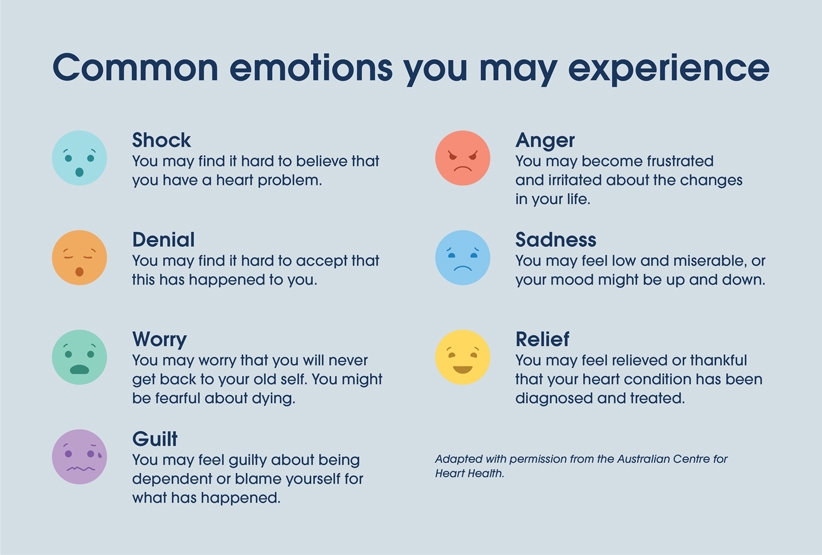
The cardiac blues may also include:
- loss of interest in usual activities and withdrawal from others
- becoming tearful and crying easily
- sleep problems or change in appetite
- confusion, forgetfulness or an inability to concentrate
- worry about a recurring heart event
How long will these feelings last?
For many people, these feelings will ease within the first few weeks. However, if your mood does not improve or beings to worsen, support is available. It's important to speak to your general practitioner (GP) or a member of your healthcare team to explore the options that can help.
Why early support matters
While the cardiac blues often resolve with time and the right support, they can sometimes develop into depression and anxiety. Recognising the signs early means you can seek help sooner - and that can make a difference to both your emotional wellbeing and your heart health.
Read our blog to learn more about the link between mental health and your heart
Where to find support
Crisis support
Your doctor
Check in with your general practitioner (GP) and healthcare team to seek help in managing your physical, mental and emotional wellbeing.
Lifeline
Call Lifeline (13 11 14) for confidential crisis support via phone, text or online chat.
13 Yarn
Call 13YARN (13 92 76) for Aboriginal and Torres Strait Islander crisis support.
General support
Cardiac Psychology Clinic
The Cardiac Psychology Clinic is available Australia-wide to people diagnosed with a heart condition (fees apply). To access the Cardiac Psychology Clinic, phone 03 9546 0009 or visit NeuroCentrix at https://neurocentrix.com.au/cardiac-psychology-clinic
Head to Health
Call Head to Health on 1800 595 212 for confidential mental health advice and support. (Please note that Head to Health is not a crisis or emergency service. For urgent support, call Lifeline or Triple Zero [000]). Visit the Head to Health website for mental health information, services and support. No appointment or GP referral is required.
WellMob
Access online resources focusing on social, emotional and cultural wellbeing for Aboriginal and Torres Strait Islander Peoples on WellMob.
Beyond Blue
Get mental health support from Beyond Blue by talking or chatting online to a counsellor or by accessing free sessions with a mental health coach. You can also call them on 1300 22 4636 for more information about mental health, treatment and management or to find a mental health practitioner in your area.
Rural mental health services
Other rural mental health services are listed in this help sheet from the National Rural Health Alliance.
Discover a community that cares
The MyHeart MyLife community is a safe online group, moderated by the Heart Foundation, where you can share your experience of living with heart disease, give and receive support, and discover ways to lead a heart-healthy life with others who are on a similar recovery journey.

Last updated16 June 2026
Last reviewed01 July 2024