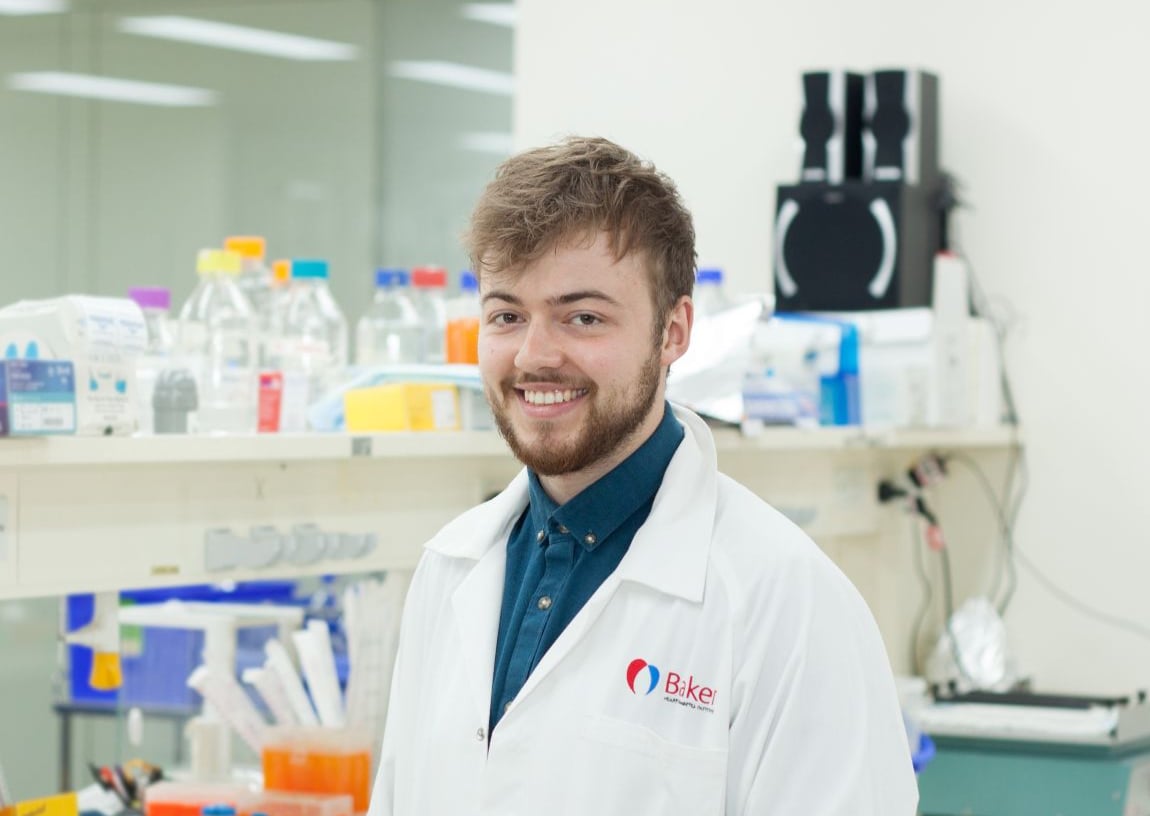
Q&A with Dr Jonathan Noonan
Repurposing a common anti-inflammatory drug to reduce inflammation and prevent heart failure after a heart attack
Jonathan (Jonny) Noonan is a research group leader at the Baker Heart and Diabetes Institute. He grew up in Scotland and studied immunology and heart disease at the University of Glasgow.
Immunology is the study of the immune system - the cells in our body that protect us from infections and disease. While these cells are essential for keeping us healthy, they can also cause harm if they become overactive or aren’t properly controlled.
Jonny moved to Australia in 2019 to join Professor Karlheinz Peter’s laboratory. He now leads a team of researchers focused on understanding how immune cells affect the heart, particularly after a heart attack. His work ranges from early laboratory research through to clinical trials.
What are you currently researching?
My research focuses on what happens in the heart after someone has a heart attack. Even with the best available medical treatments, many people are left with permanent damage to their heart, especially to the main pumping chamber, the left ventricle.
One of the key reasons for this damage is inflammation. Inflammation is the body’s natural response to injury, but after a heart attack it can become too strong and last for too long. Instead of helping the heart heal, this ongoing inflammation can cause further damage to heart tissue and increase the risk of long-term complications, including heart failure. Unfortunately, there are no treatments that directly stop this harmful inflammation in the heart after a heart attack.
One of the main drivers of inflammation in the heart is the immune system, consisting of white blood cells. In earlier research using animal models, we discovered that blocking T cell responses – which are a very important part of our immune system - reduced inflammation and improved the heart’s ability to pump after a heart attack. We achieved this using a medicine called abatacept, which is already used to treat people with rheumatoid arthritis.
In this project, we are now testing this treatment in people for the first time. Our aim is to confirm that abatacept can safely block T cell activity after a heart attack and to explore whether this approach could help reduce heart damage and support better recovery.
What difference will your research make to people’s cardiovascular health in Australia?
More people are surviving heart attacks than ever before, which is great news. However, many go on to experience long-term complications, including heart failure.
Heart failure can significantly affect a person’s quality of life and often requires ongoing treatment and care. At present, there are limited options to prevent this damage from occurring in the first place.
If we can reduce inflammation early after a heart attack, we may be able to limit permanent heart damage, support better recovery, and most importantly reduce the number of people who go on to develop heart failure. Over time, this could lead to better long-term outcomes for people across Australia
What motivated you to do your research?
Heart attacks have a huge impact on our families, friends and millions of people in Australia and around the world. While survival rates have improved, many people are left with lasting heart damage that affects their quality of life.
Over the past five years, my team has worked to understand why this damage occurs, particularly the role of inflammation after a heart attack. Through this work, we discovered that blocking a specific immune response could reduce inflammation and protect the heart in animal studies.
Because there are currently no effective treatments that directly target this harmful process in the heart - and because an existing medicine could potentially be used - we knew we had a responsibility to move this research into clinical trials as quickly as possible.
Are there any achievements or discoveries from the past year you can share with us?
Our recent research showed that blocking T cell activity reduced inflammation and improved heart function in animal studies. This work provided the strong evidence needed to take the next step into clinical trials involving people who have had a heart attack.
With Heart Foundation support, we are now testing this approach in people for the first time. This is an important milestone and will help us understand whether this treatment could become a new option for people recovering from a heart attack.
What role has Heart Foundation funding had in your career journey?
Medical research funding in Australia is becoming increasingly difficult to secure, yet it is essential for turning scientific discoveries into new treatments that can improve care for people living with heart disease.
Heart Foundation funding has played a critical role in allowing us to move this research from the laboratory into clinical trials. This support has enabled our team to focus on translating scientific discoveries into real-world outcomes that could help reduce heart damage after a heart attack.
Without this funding, reaching this stage of the research would not have been possible.
Do you have a message for Heart Foundation supporters?
Your generosity is helping us tackle one of the most urgent challenges in heart care - preventing lasting damage after a heart attack.
Thanks to your support, we are now testing a new treatment approach that could change how heart attacks are managed in the future. At a time when research funding is under increasing pressure, your contribution is making this work possible and giving hope to people affected by heart disease.
Thank you for supporting this research and for helping us move closer to better outcomes for people living with heart disease.
Last updated01 June 2026