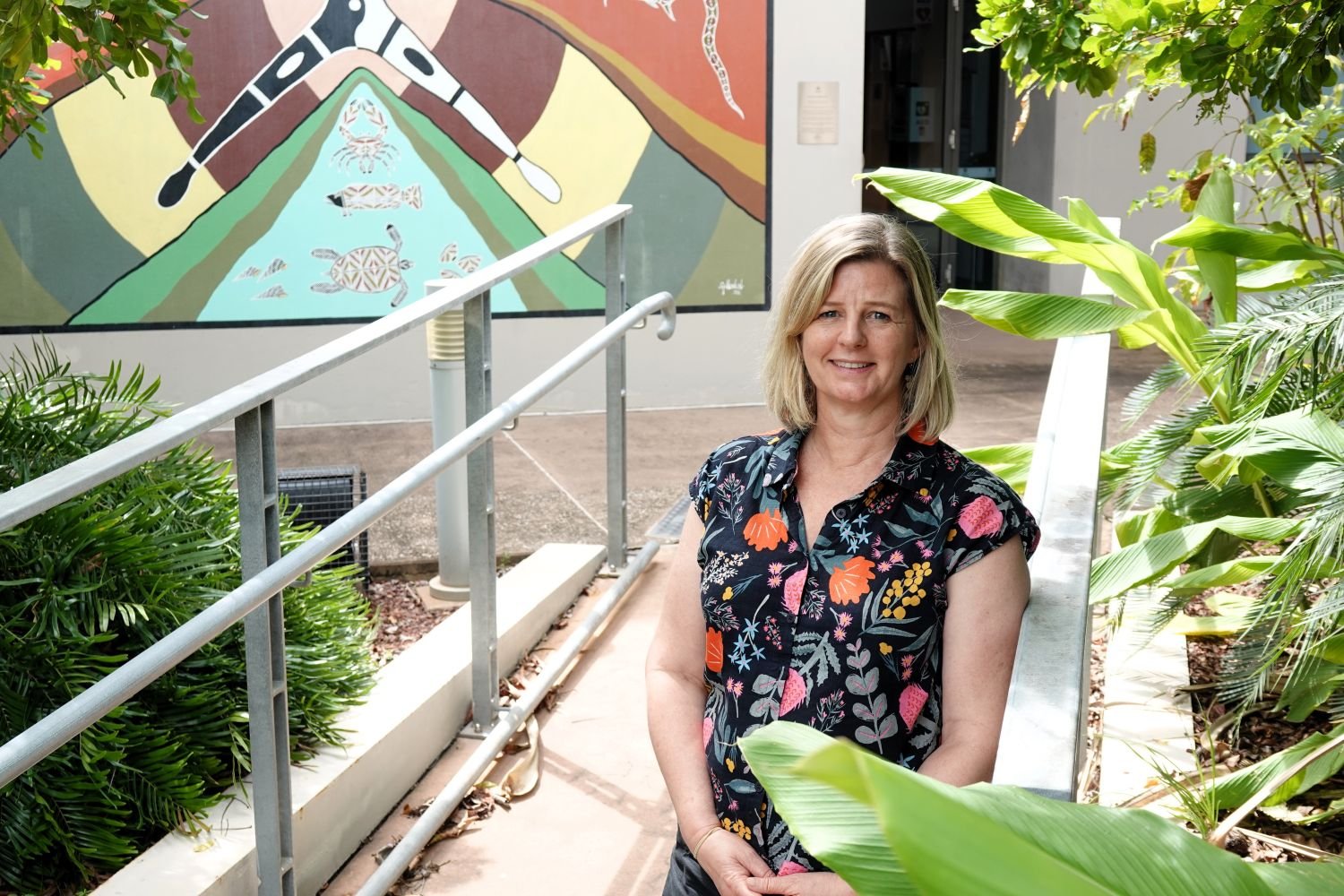
Working with remote community stores to improve heart health by reducing smoking
Professor Marita Hefler, Flinders University
First Nations CVD Grant
Years funded: 2026 - 2028
Smoking is a leading risk factor for cardiovascular disease. Achieving the Heart Foundation vision of heart health for everyone in Australia by 2050 requires a dramatic reduction in smoking prevalence, particularly in remote First Nations communities, where smoking prevalence is high and not declining in line with broader Australian trends.
Among people who smoke, coronary heart disease is 1.7 times higher, and the risk of heart attack 2.5 times higher, than those who do not smoke. A 2019 Australian study estimated that 15% of cardiovascular deaths and 11.5% of the cardiovascular disease burden are attributable to smoking. Smoking-attributable cardiovascular mortality is 38.2% among men aged 45-54 and 33.7% for women. Among First Nations peoples, the cardiovascular disease burden is twice that of non-Indigenous people. Smoking prevalence is three times higher and accounts for 34% of cardiovascular diseases, yet a majority of people who smoke want to quit.
Aboriginal community-controlled stores in remote communities are owned and governed by community members. In contrast to other retailers, they have an imperative to be both financially viable and improve community health, uniquely positioning them to lead retailer action on smoking. Outback Stores provides retail store management and support services to Indigenous-owned stores in remote locations in the Northern Territory, Western Australia, New South Wales, South Australia and Queensland. It promotes healthy store environments through innovative pricing, placement, promotion and product strategies. One of Outback Stores' goals is to support community, research and legislative initiatives to reduce tobacco use.
This proposal is nested within a 5 year NHMRC Ideas Grant (2024-2029) led by Flinders University in partnership with Outback Stores, remote community stores, community members and Aboriginal community-controlled health services. The aim is to co-design and test innovative strategies which are culturally acceptable and commercially feasible to reduce retail tobacco supply and availability and thereby reduce smoking in remote First Nations communities.
The research design includes qualitative and quantitative components. Aboriginal Participatory Action Research methodology encompassing yarning and collaborative decision-making will be used to conduct several cycles of consultation to co-design locally-driven strategies to reduce tobacco availability. The co-designed strategies will then be tested and evaluated using a combination of store sales data analysis and surveys and interviews with customers, store staff, store managers, directors and Outback Stores area managers.
Reducing the retail availability of tobacco will support communities to be smoke-free and address a leading cause of cardiovascular disease.
Supporting breakthrough cardiovascular research in Australia
- Looking to apply for Heart Foundation research funding? Keep an eye on our upcoming opportunities and application dates.
- Stay informed on heart health research by subscribing to our monthly Research Connect newsletter.
- Seeking participants for a research study? Access the Join Us Research Register to connect with a ready-to-engage pool of research participants.
- Read more about our researchers and their projects through our Researcher Q&As.
- Every donation to the Heart Foundation helps fund world-leading research in the fight against heart disease. Donate today.
Last updated20 May 2026