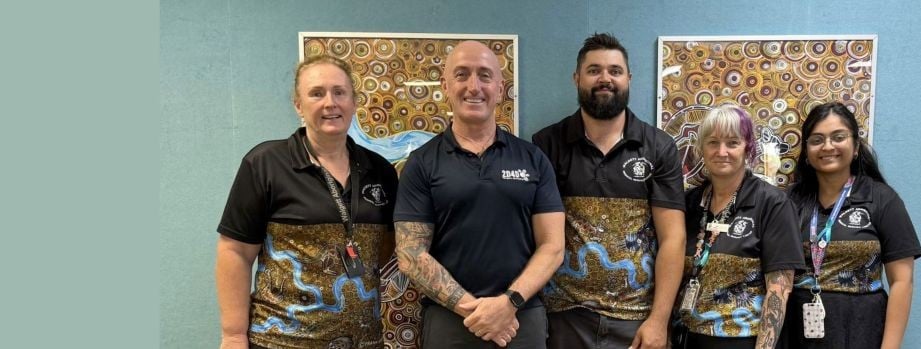
Too deadly for diabetes
Background and rationale
Too Deadly for Diabetes, led by Gomeroi man Ray Kelly, is a lifestyle program focused on assisting Aboriginal and Torres Strait Islander people to manage and potentially reverse type 2 diabetes and related health issues.1 The program is developed in collaboration with Aboriginal and Torres Strait Islander communities, ensuring it is culturally appropriate and relevant. The program aims to achieve weight loss and diabetes management through a combination of diet, physical activity, education, and motivational training.
In the 10-week program, participants receive a structured plan with meal plans, physical activity, group and online programs, and educational materials. Participants receive daily motivational messages and access to support from experienced exercise trainers and nutritionists.
The program is run through local Aboriginal Medical Services and Aboriginal Health Services, ensuring culturally safe and accessible support. The program takes a community wide approach, looking for opportunities to collaborate and provide a greater support network for the participants and their families.
Outcomes and impact
Outcomes
The program is provided within a local Aboriginal Medical Service and the target audience is people with, or at risk of, type 2 diabetes or cardiovascular disease. Training is provided to the staff and then a localised design is completed. An important part of this design is the identification of barriers that might occur, then an agreement on how we might design our program so they are eliminated or their impact limited. This provides a solid foundation to assist participants in successfully improving health outcomes.
- An independent mixed-methods study analysed routinely collected physiological data and audio-recorded focus group sessions.1
- Participants were overwhelmingly positive about the program, lost weight and improved their diastolic blood pressure and glycaemic control. Participants valued feelings of belonging in the program and shared optimism about their ability to improve their health.
- Qualitative analysis of participant surveys revealed three main themes. These were ‘with the Mob’, ‘for the Mob’ and ‘program elements’ which referred to how the program was designed.
- The strengths of the program were its Aboriginal and Torres Strait Islander-inspired design, low-cost and easy-to-prepare diet, and cultural leadership.
- Participant experiences of the program are also detailed on the website toodeadlyfordiabetes.com.au/our-program.
Program impact
In the town of Coonamble, participants lost a total of over 2,400 kg across 3 years, with the health service reporting a reduction in medicine prescriptions and Hba1c levels. The program was initially capped at 30 participants, but this was increased to 70 due to the interest from the community.
As a result of this work, Ray was acknowledged for his experience in working with community, and invited to author three core chapters in the 4th edition of the Royal Australian College of General Practitioners and National Aboriginal Community Controlled Health Organisation’s National guide to a preventive health assessment for Aboriginal and Torres Strait Islander people. The chapters authored by Ray are, Healthy eating, Physical activity and sedentary behaviour, and Overweight and obesity. Ray also presented to the Parliamentary Inquiry into Diabetes and the Too Deadly for Diabetes program was mentioned by other submissions, including those from Diabetes Australia and Exercise and Sports Science Australia. He has also provided significant contribution to the new Australian 24-hour movement guidelines for Aboriginal and Torres Strait Islander Populations, and the Heart Foundations Obesity and CVD consensus statement as part of the lifestyle taskforce committee.
Investment and funding
The program has received funding from NSW Ministry of Health, several Primary Health Networks across Australia, and directly from the Aboriginal Medical Services.
Enablers and lessons learned
Providing participants with a positive and supportive environment whilst being clear on goals and methods for achieving them has worked well. Common barriers are access to affordable fresh foods, drinkable water, and quality health care that can be major barriers for Aboriginal and Torres Strait Islander people across the country. Therefore, strategies are required for these at the onset for success to be achieved. Other challenges that were overcome were a lack of engagement with the local health sector, racism within the health sector, English as a second language, remoteness, and extreme weather conditions.
It is recommended that the programs are designed with the local community and an honest appraisal of any potential barriers be completed prior to launching a program. Aboriginal and Torres Strait Islander people want to be healthy and are able to improve their health outcomes if given effective strategies and support.
Further information
Website: https://toodeadlyfordiabetes.com.au/
References
- Power, T, East, L, Gao, Y, et al. A mixed-methods evaluation of an urban Aboriginal diabetes lifestyle program. Australian and New Zealand Journal of Public Health. 2021;45:143-149. https://doi.org/10.1111/1753-6405.13092
Last updated28 September 2026